Blogs

image
26-02-2026

How Do Desiccant Packaging Materials Prevent Moisture Damage in Medicines?

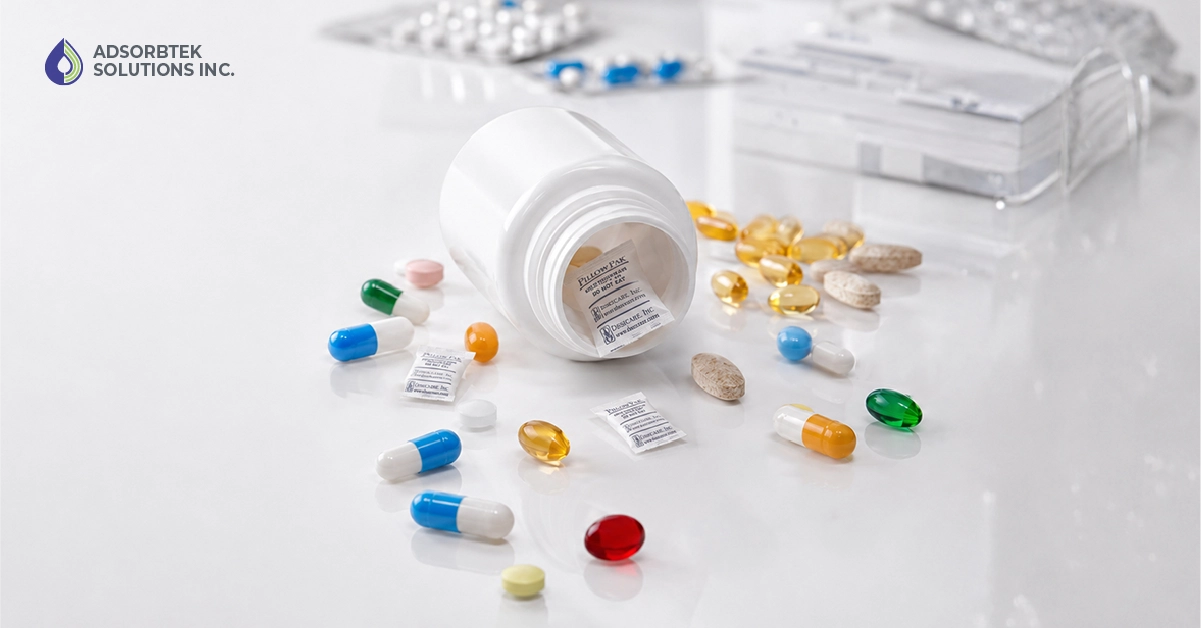
Pharmaceutical products are very sensitive to moisture. Even a little water can change how medicines work, make them spoil faster, or reduce their safety. Using desiccant packaging materials ensures that medicines stay strong, safe, and effective from manufacturing to the patient. These materials help protect both the product and the brand reputation. Moisture protection is not just a choice; it is a critical step for every pharmaceutical product. Companies that fail to use proper moisture control risk product recalls, damage to their reputation, and patient safety concerns.

Why Moisture Poses a Risk to Medicines

Even tiny amounts of humidity can harm tablets, capsules, powders, or liquid medicines. Moisture can cause:

  • Clumping of tablets, which leads to wrong doses.
  • Breakdown of liquid medicines, reducing their effectiveness.
  • Caking of powders, making them hard to handle or use properly.

These issues can happen quickly if medicines are exposed to the wrong storage or shipping conditions. Controlling humidity is essential to maintain the quality and safety of medicines.

How Modern Desiccants Protect Medicines

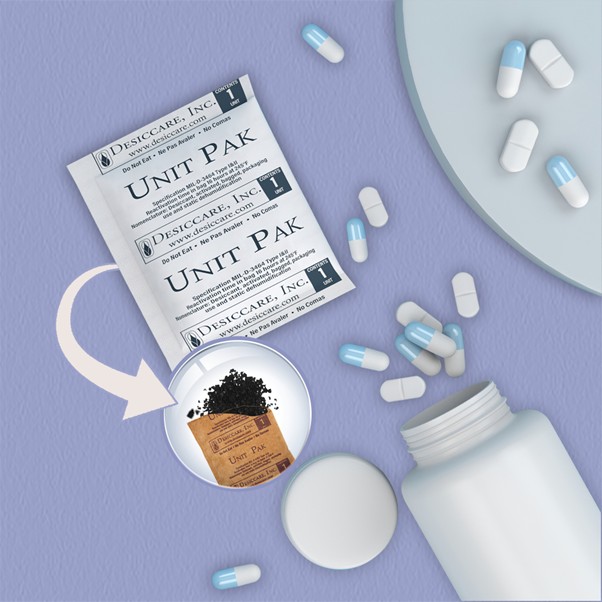
Desiccants are materials that actively remove moisture from the environment inside packaging. Today’s technology allows for precise and efficient moisture control, making medicines safer for longer. Popular options include:

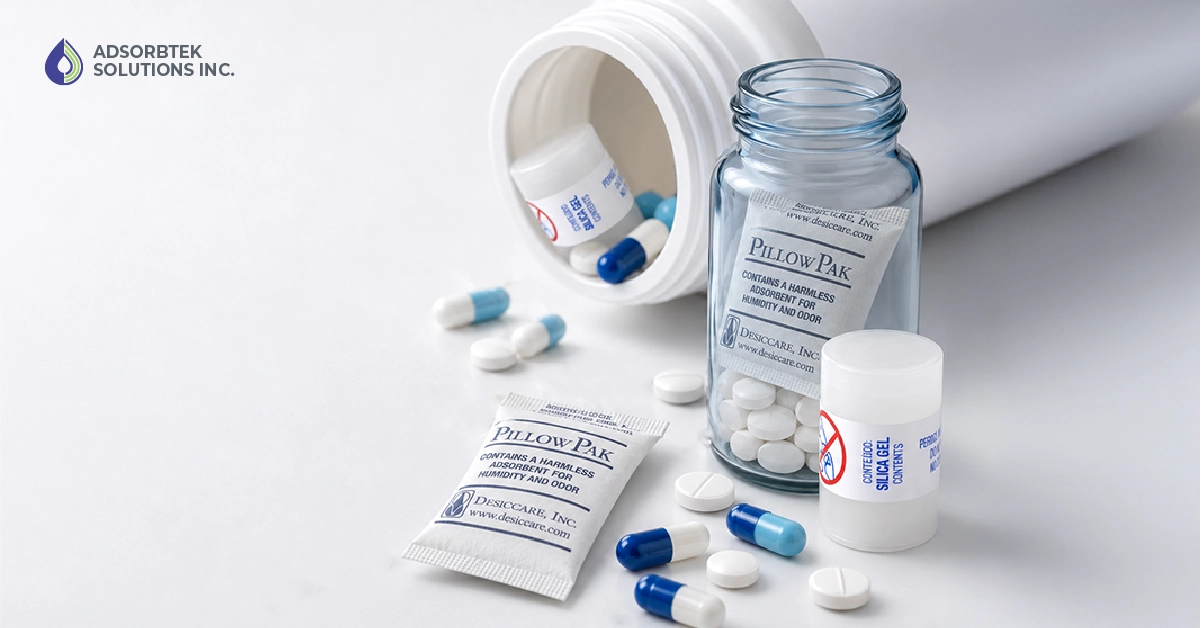
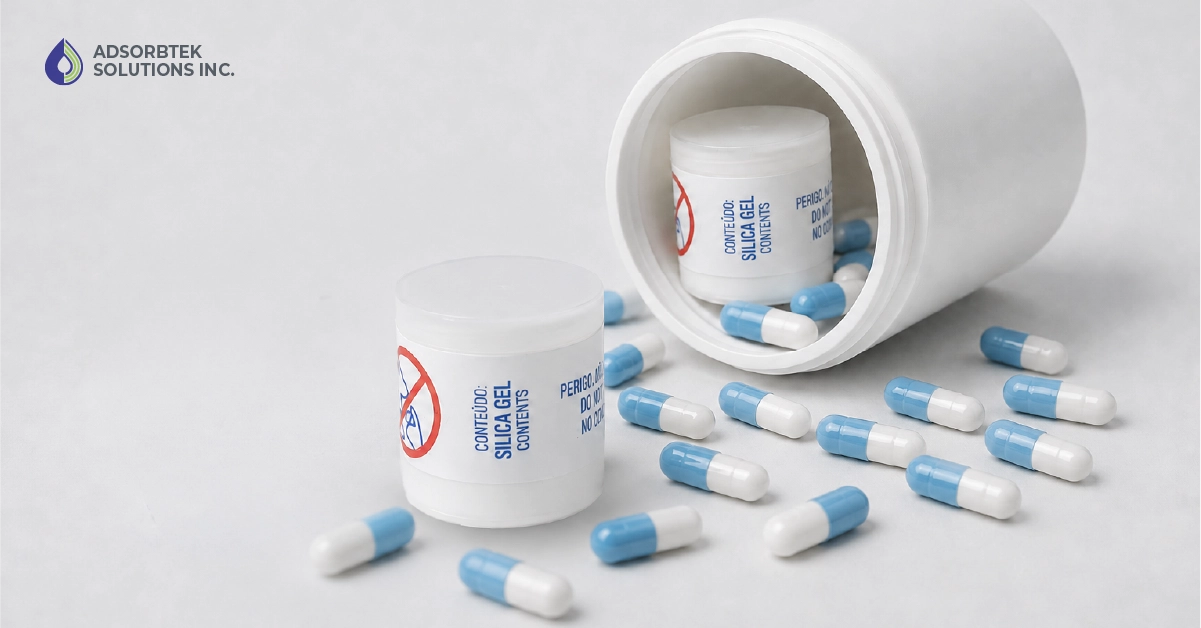
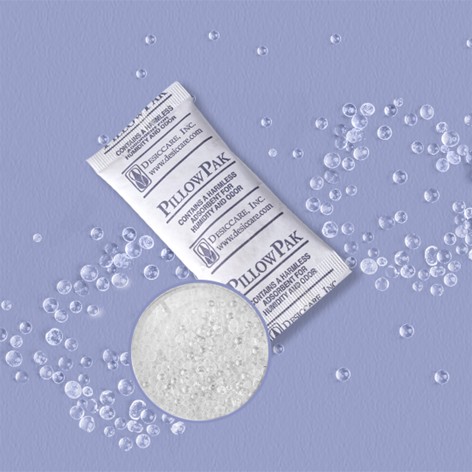
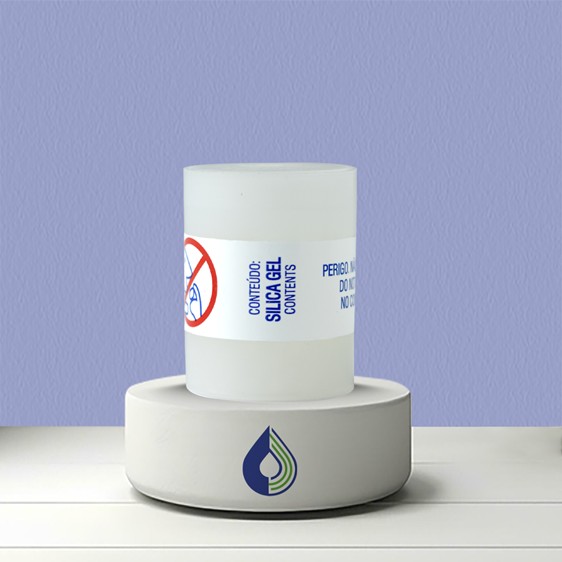
  • Silica Gel Packs: These are very common and help remove moisture slowly over a long period.
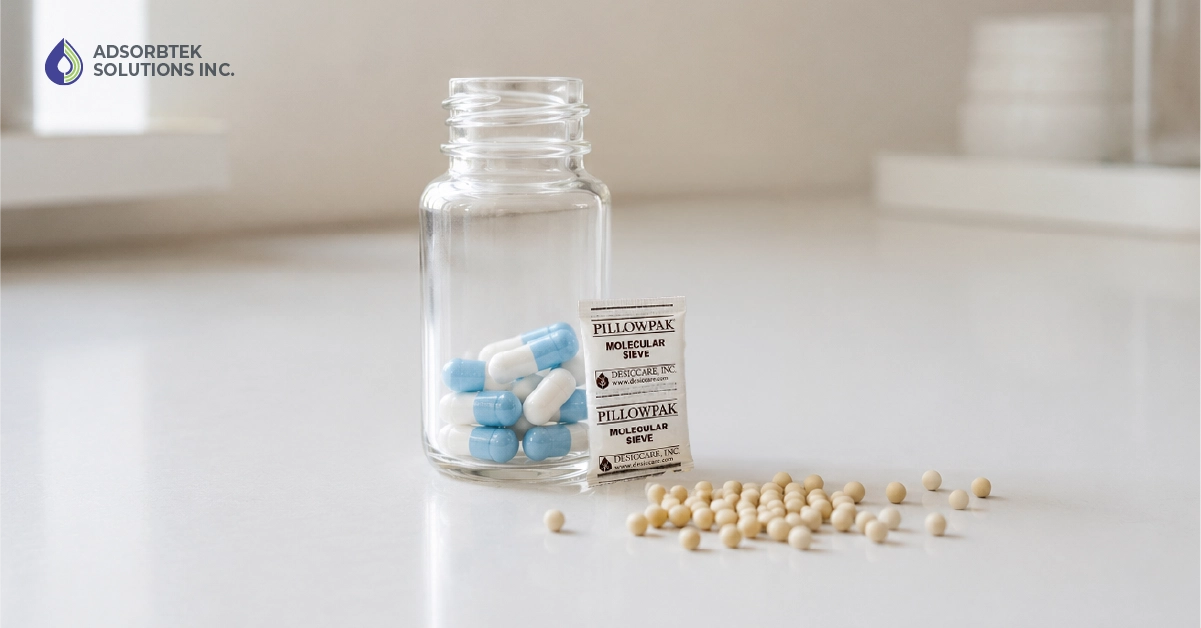
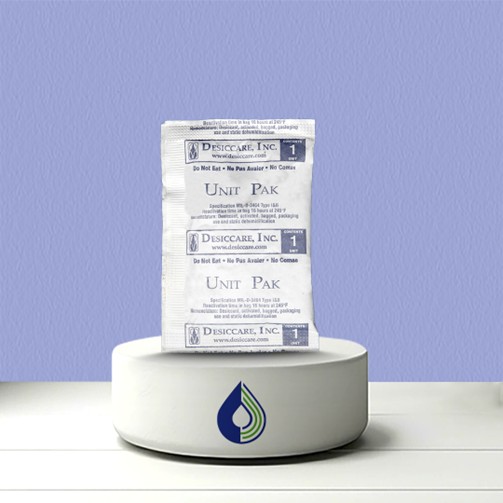
  • Molecular Sieve Unit Paks: These work for highly sensitive medicines and can target specific humidity levels.
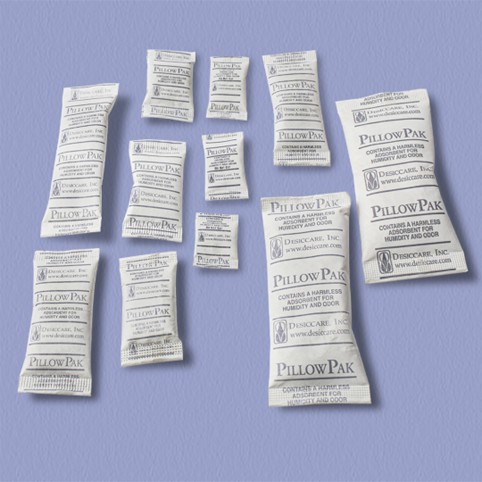
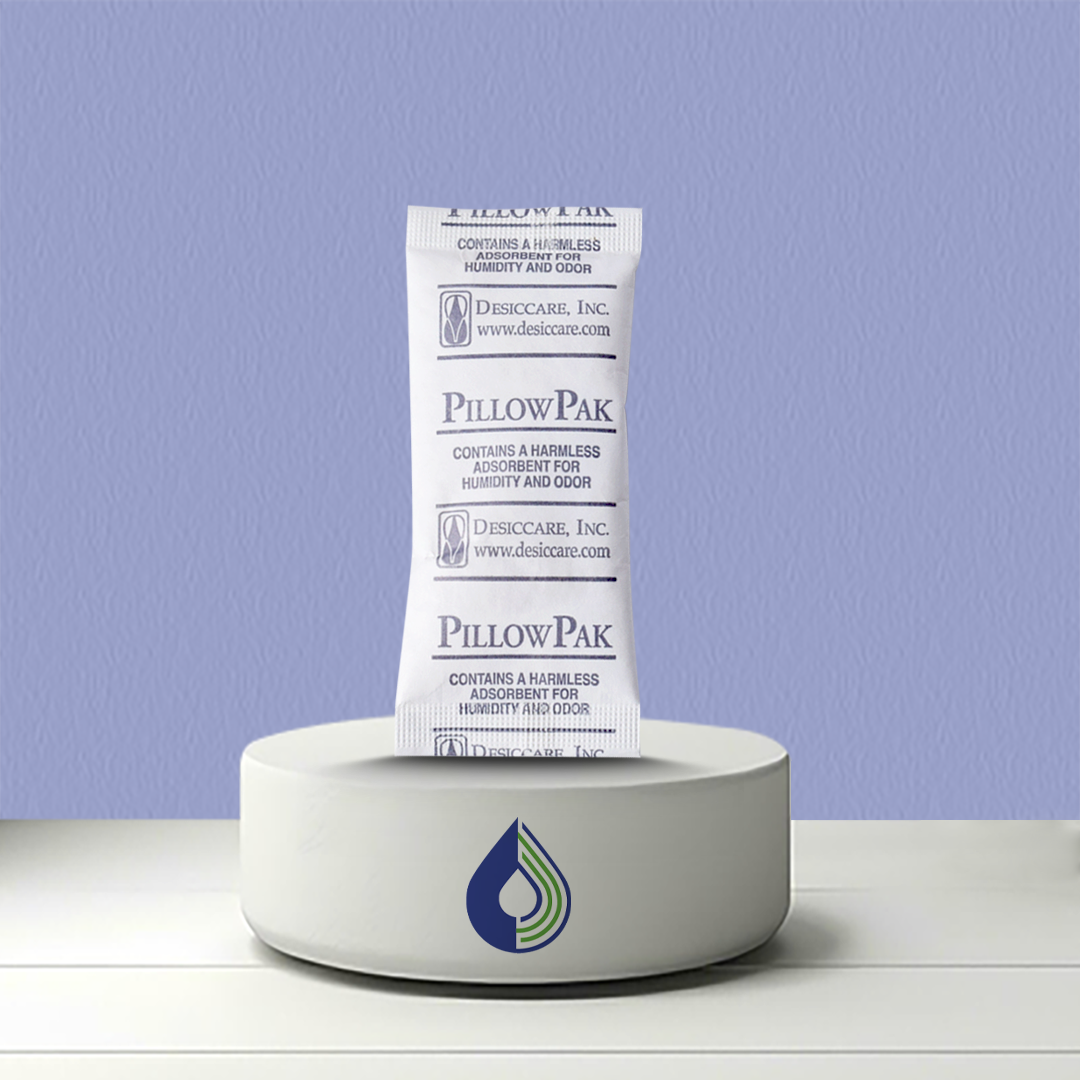
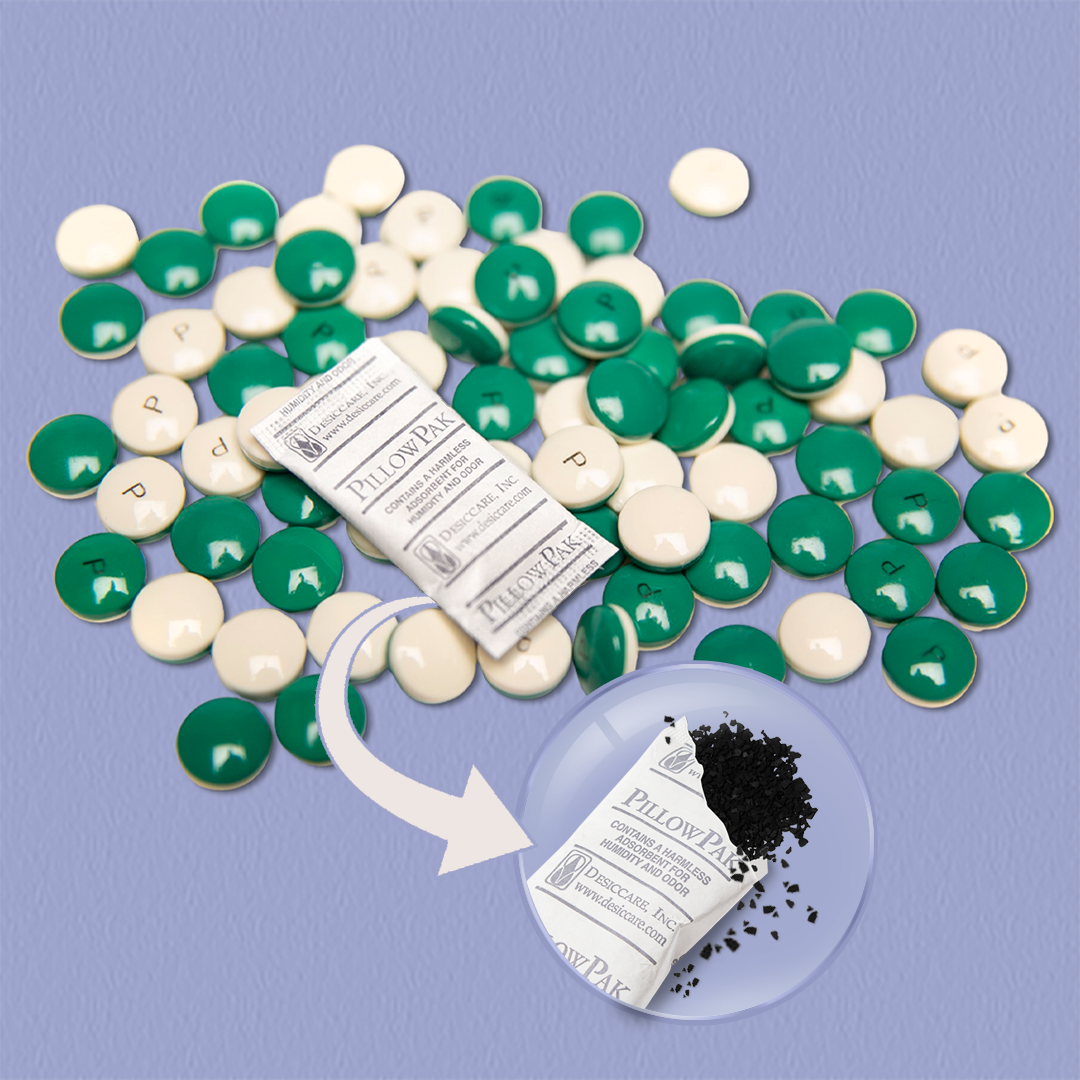
  • Clay and Pillow Paks: Cost-effective solutions for products that are less sensitive but still need protection.

By absorbing moisture continuously, these desiccants create a safe and dry environment, even if external humidity changes during storage or transport.

Innovative Packaging Designs That Enhance Protection

Desiccants work best when combined with smart packaging designs. Modern packaging uses materials and features to stop moisture from entering:

  • Barrier Films: Multi-layer foils prevent water vapor from passing through the packaging.
  • Airtight Bottles: HDPE or PET bottles keep the internal environment stable when paired with desiccants.
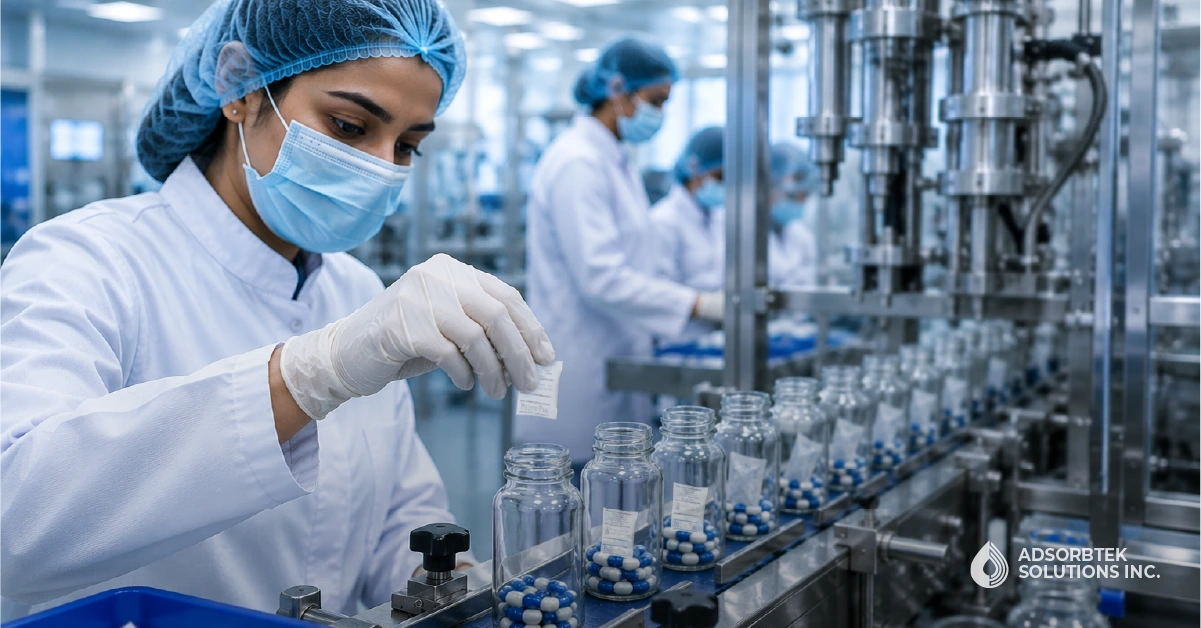
  • Integrated Sachets: Small desiccant pouches inside bottles or cartons provide precise moisture control.

Using a combination of desiccants and protective packaging improves efficiency, reduces waste, and protects the medicine’s quality for the long term.

Smart Monitoring for Pharmaceutical Safety

To prevent losses and maintain quality, monitoring systems are now part of packaging:

  • Visual Humidity Indicators: Simple color-changing cards show if the internal moisture level is too high.
  • Temperature & Humidity Sensors: These devices track conditions during shipping and storage.
  • Regulatory Compliance: Aligns with FDA, EMA, and ICH standards, helping ensure products meet international safety rules.

Smart monitoring allows companies to act before medicines are damaged. This proactive approach protects patient safety and reduces financial losses.

Choosing the Right Desiccant for Each Product

Not all desiccants work the same. Choosing the right one depends on product type, container, and shipping conditions:

  • Highly Sensitive Medicines: Use silica gel or molecular sieves to maintain precise humidity levels.
  • Container Type: Tablets, powders, liquids, and creams all need desiccants in different forms.
  • Shipping Environment: Long-distance or temperature-variable shipping requires stronger or larger desiccants.

Consulting an expert ensures the proper amount and type of desiccant is used, keeping medicines safe throughout their journey.

Partnering With Trusted Suppliers

Reliable suppliers make a big difference. They provide desiccants that are tested, certified, and consistent in quality:

  • Consistency and Reliability: Packs perform exactly as expected for long-term protection.
  • Expert Recommendations: Help choose the right desiccant type, size, and quantity for specific medicines.
  • Regulatory Adherence: Supports compliance with strict safety and quality standards.

Choosing the right supplier ensures medicines are always protected and operations run smoothly.

Ending Note:

At Adsorbtek Solutions Inc., we offer high-performance desiccant packaging materials designed to protect sensitive medicines. Our team works closely with clients to select the best products for each formulation, ensuring stability, compliance, and long shelf life. By partnering with us, you get solutions from one of the best desiccant suppliers that guarantee reliability, safety, and quality control.

We help our customers manage moisture risks, improve product stability, and meet global regulatory standards, making sure your medicines reach patients safely and effectively.

FAQs:

1. What are desiccant packaging materials used for?

Desiccant packaging materials keep medicines dry by absorbing moisture, ensuring safety and effectiveness throughout storage and shipping.

2. How do desiccants protect tablets and powders?

They remove excess humidity inside packaging, preventing clumping, caking, or degradation of sensitive formulations.

3. Which types of desiccants work best for pharmaceuticals?

Silica gel, molecular sieve packs, and clay pouches are ideal depending on the product and shipping conditions.

4. Can desiccants help medicines during long-distance shipping?

Yes, they maintain low moisture levels even in varying temperature and humidity conditions, keeping medicines stable.

5. Why should I choose trusted suppliers for desiccants?

Reliable suppliers like Adsorbtek Solutions Inc. provide tested, compliant, and high-quality materials for consistent protection.

image
25-02-2026

Why Is Bulk Desiccant for Shipping Essential for Global Pharma Distribution?

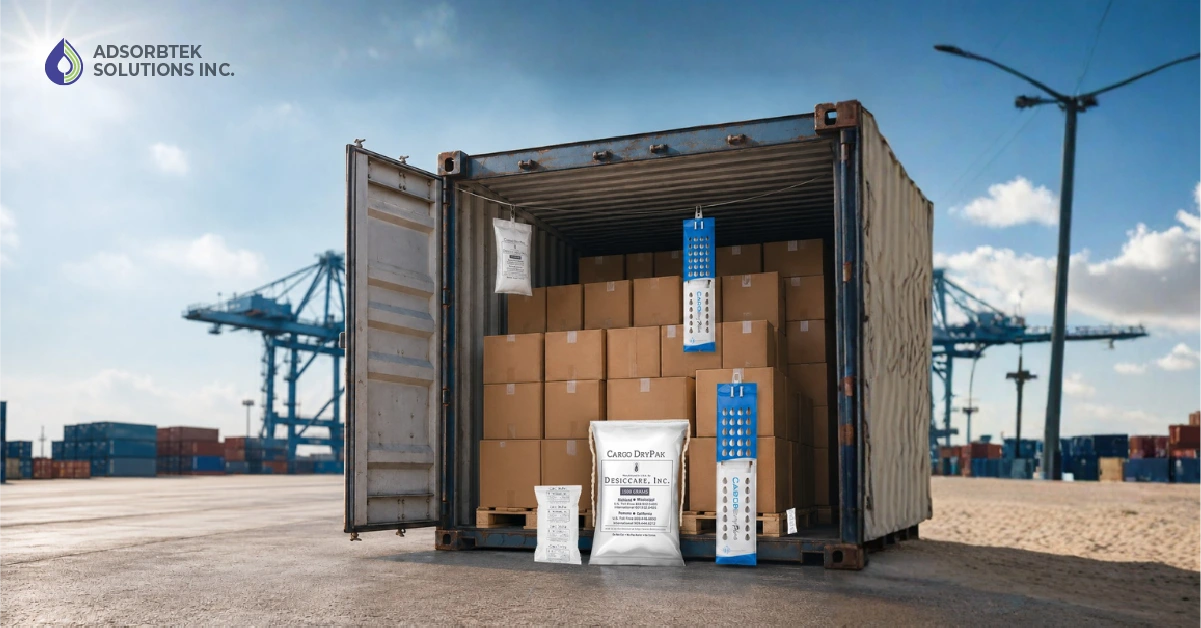
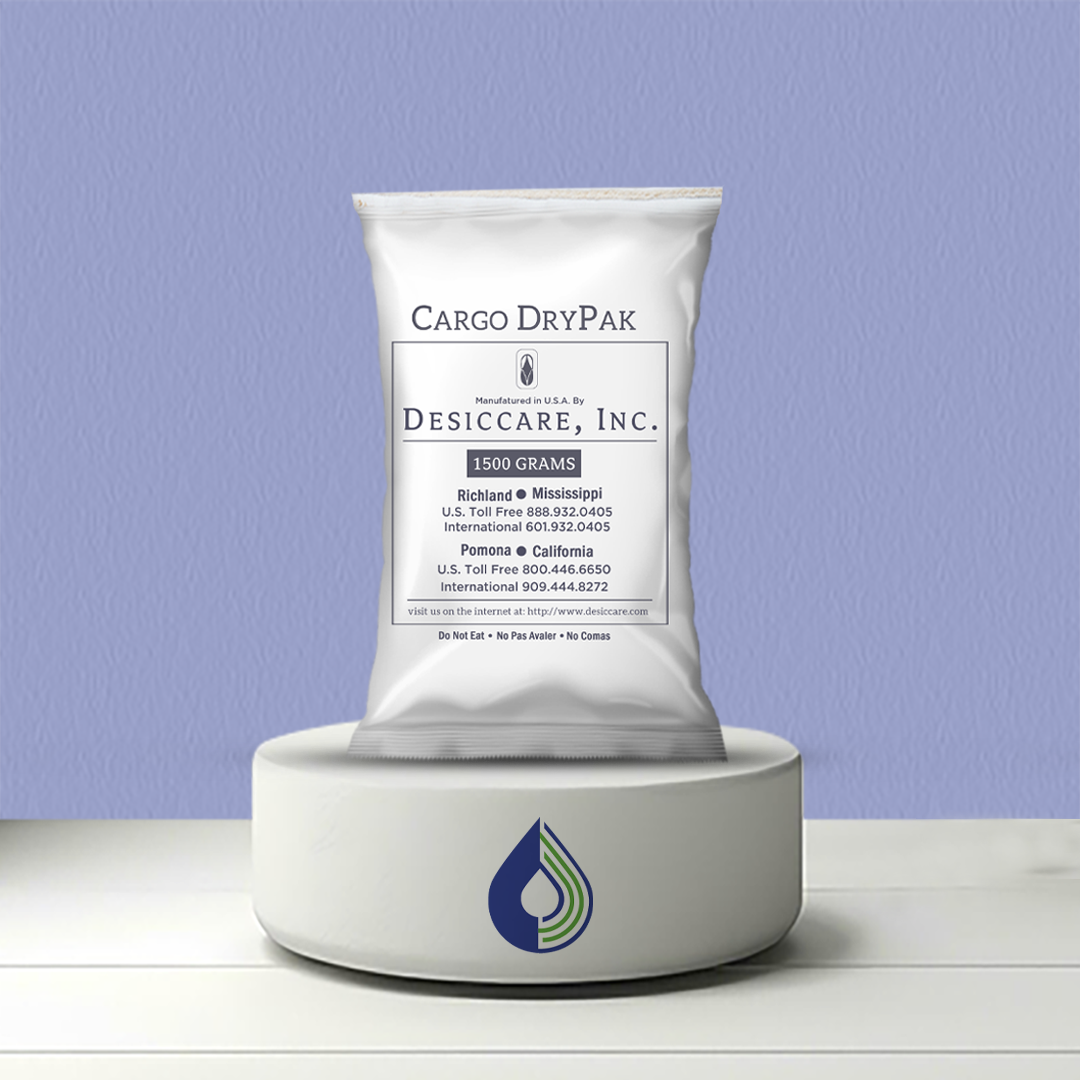
Maintaining the quality of medicines during international transport is critical. Bulk desiccant for shipping ensures pharmaceuticals remain stable, preventing moisture damage, potency loss, or contamination. With complex global supply chains, pharma manufacturers need reliable desiccant solutions to safeguard sensitive formulations while complying with international regulations. Medicines, especially tablets, capsules, powders, and biologics, are extremely sensitive to humidity. A tiny amount of water can affect their performance, stability, or safety.

1. The Science Behind Moisture Protection in Pharma Shipping

Pharmaceutical products can degrade if exposed to humidity. Bulk desiccants act like sponges, absorbing moisture inside packaging or shipping containers. This keeps medicines dry and safe.

Why It Matters:

  • Prevents chemical breakdown of active ingredients
  • Reduces microbial growth in high-moisture environments
  • Ensures consistent product efficacy for end users

Real-World Example: Imagine tablets in a tropical country. Without desiccants, they can clump together or lose strength. Bulk desiccants prevent this by maintaining low humidity levels.

Compliance Insight: Using desiccants supports GMP and ICH Q1A stability guidelines for pharmaceutical transport.

2. Types of Bulk Desiccants for Pharma Transport

Not all desiccants perform equally. Choosing the right type depends on product sensitivity, shipment duration, and environmental conditions.

Common Options Include:

  • Silica Gel: Fast moisture absorption, safe for most pharmaceuticals
  • Molecular Sieve: High-capacity desiccant for extreme humidity conditions
  • Clay-Based Desiccants: Economical and suitable for short-term transport

Tip: Combining different desiccant types can optimize protection across varying climates during global shipping.

Compliance Insight: Selecting desiccants that meet pharmaceutical-grade standards ensures regulatory compliance and safe transport.

3. Strategic Placement for Maximum Efficiency

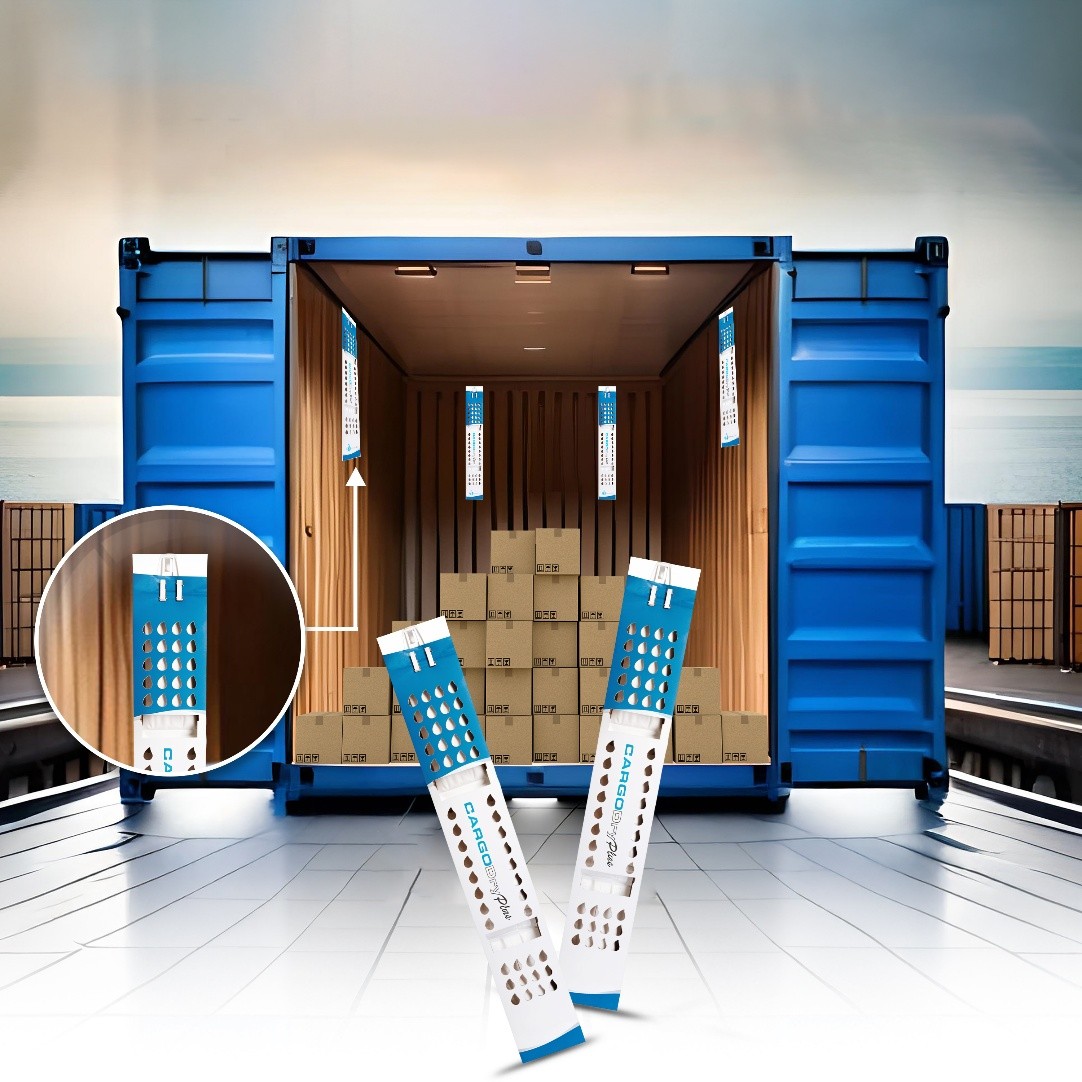
Simply adding desiccants is not enough; placement determines effectiveness. Bulk desiccants should be distributed evenly across cargo to prevent moisture pockets.

Best Practices:

  • Place packs near areas prone to condensation
  • Avoid blocking airflow around products
  • Monitor humidity with sensors for critical shipments

Example: In a container of vials, placing desiccants near the corners and top ensures the air inside stays dry.

Compliance Insight: Proper placement aligns with IATA and WHO guidelines for temperature and humidity control in pharma logistics.

4. Protecting Medicines Through Global Supply Chains

Shipping pharmaceuticals internationally exposes products to diverse climates. From tropical ports to cold storage warehouses, uncontrolled humidity can compromise product quality.

Bulk Desiccant Advantages:

  • Maintains optimal humidity levels during long transit
  • Minimizes risk of condensation and packaging damage
  • Ensures safe delivery even in extreme weather conditions

Example: A shipment from Asia to Europe can face high humidity in tropical ports and dry cold air in airplanes. Bulk desiccants balance humidity inside the container.

Compliance Insight: Using bulk desiccants helps meet international transport regulations for medicinal products, avoiding penalties or shipment rejection.

5. Bulk Desiccants and Cost Efficiency

Moisture damage can lead to massive financial losses due to spoiled inventory or product recalls. Bulk desiccants reduce risk, saving manufacturers money.

Benefits for Pharma Businesses:

  • Lowers product waste and replacement costs
  • Reduces delays caused by damaged shipments
  • Supports consistent delivery schedules for global clients

Example: A shipment of vaccines exposed to high humidity could lose potency, requiring costly replacement. Bulk desiccants prevent this, ensuring investment protection.

Compliance Insight: Documented desiccant usage demonstrates adherence to stability and quality standards, supporting regulatory audits.

6. Partnering With Trusted Desiccant Suppliers

Reliable suppliers ensure high-quality desiccants and proper packaging solutions. Expert guidance is crucial for selecting the right desiccant type, quantity, and placement.

What to Expect from Suppliers:

  • Verified pharmaceutical-grade desiccants
  • Regulatory compliance documentation
  • Support for container design and distribution strategies

Example: A supplier can recommend the exact number of silica gel packs needed for a 20-foot container carrying sensitive medications.

Compliance Insight: Partnering with certified suppliers ensures adherence to ISO, GMP, and IATA standards.

7. Enhancing Operational Safety and Product Confidence

Bulk desiccants provide peace of mind for manufacturers, distributors, and pharmacists. Controlled humidity reduces risks and protects product integrity.

Operational Advantages:

  • Minimizes moisture-related complaints from clients
  • Ensures compliance with quality control measures
  • Strengthens brand trust in the pharmaceutical market

Example: Hospitals receiving medicines can rely on consistent quality, even if the shipment traveled through humid ports.

8. Advanced Monitoring With Humidity Sensors

Modern shipping uses digital humidity sensors alongside bulk desiccants. These sensors track moisture in real time and alert suppliers if conditions change.

Benefits:

  • Immediate notification of humidity spikes
  • Ability to take corrective action before damage occurs
  • Improved traceability for compliance reporting

Compliance Insight: Digital monitoring supports FDA, EMA, and WHO requirements for real-time environmental control.

9. Regulatory and Compliance Considerations

Global pharma distribution is tightly regulated. Bulk desiccants must meet pharmaceutical-grade quality standards and comply with GMP, ISO, IATA, and WHO guidelines.

Key Compliance Points:

  • Documentation for regulatory audits
  • Validation of desiccant efficacy
  • Safe handling and placement protocols

Example: Incorrect desiccant placement can lead to moisture damage and regulatory non-compliance, risking shipment rejection.

In Closing:

Global pharmaceutical distribution requires precise moisture control. Using container desiccant packaging with bulk desiccants ensures medicines reach their destination intact, safe, and effective. At Adsorbtek Solutions Inc., our bulk desiccant solutions are tailored to meet international compliance standards. We provide guidance on desiccant type, placement, and quantity, giving our clients confidence in every shipment. Protect your products and your brand with our proven solutions today.

Contact Adsorbtek Solutions Inc. to enhance your pharmaceutical shipments with reliable bulk desiccant protection and ensure product safety across the globe.

FAQs:

Q1: Why are bulk desiccants important for shipping pharmaceuticals?

A1: Bulk desiccants control moisture levels during transport, protecting medicines from degradation and ensuring they remain safe and effective.

Q2: How do bulk desiccants work in pharma shipments?

A2: They absorb excess humidity inside containers, preventing chemical breakdown, clumping, or microbial growth in medicines.

Q3: Can bulk desiccants help comply with global regulations?

A3: Yes, using certified bulk desiccants supports GMP, ISO, IATA, and WHO guidelines for pharmaceutical shipping.

Q4: What types of bulk desiccants are commonly used?

A4: Silica gel, molecular sieves, and clay-based desiccants are preferred, each suited for specific humidity conditions and product needs.

Q5: How should desiccants be placed in shipping containers?

A5: Even distribution near moisture-prone areas ensures optimal humidity control, maintaining medicine quality and regulatory compliance.

image
19-02-2026

What Makes Pharma Packaging Suppliers Essential for Pharmaceutical Compliance?

In pharmaceutical manufacturing, reliable pharma packaging suppliers are a key part of keeping medicines safe and effective. Packaging is more than just a container; it protects sensitive drugs from moisture, oxygen, and contamination. Suppliers with technical knowledge help companies follow strict rules and regulations while making sure the medicine works as intended.

Understanding Compliance in Pharma Packaging

Pharmaceutical compliance means following strict rules set by authorities like the FDA, EMA, and WHO. These rules make sure medicines are safe and effective. If rules are ignored, it can cause drug recalls, legal trouble, or harm to patients. Proper packaging acts like a shield, keeping medicines safe during storage, transportation, and even when the medicine reaches the patient.

Key points:

  1. Helps manufacturers follow USP, ISO, and pharmacopeia standards.
  2. Reduces risks of contamination or chemical changes in the drug.
  3. Provides tracking and records for inspections and audits.

The Role of Material Selection

Choosing the right material is very important to keep medicines stable and effective. Suppliers study different materials like glass, plastic, aluminum, and laminated films to see which works best. High-quality materials prevent moisture, oxygen, or light from damaging the medicine.

Material considerations include:

  1. Making sure the material does not react with the medicine.
  2. Strong barrier properties to block moisture, air, and sunlight.
  3. Durability so the medicine stays safe during storage and transport.

By using the correct materials, medicines stay effective for longer, and patients get safe, reliable products.

Precision in Packaging Design

How packaging is designed matters a lot. Suppliers include features like tamper-evident caps, child-resistant closures, and airtight seals to protect medicine. Every small detail can prevent contamination and ensure correct dosing.

Design highlights:

  1. Special closures for liquids, powders, creams, and ointments.
  2. Easy-to-use designs that reduce errors during handling.
  3. Labels with codes to track and trace products.

Good design helps patients, pharmacists, and manufacturers handle medicine safely.

Quality Control and Testing Standards

Suppliers do strict testing to make sure packaging works as expected. They test for durability, strength, and how well the packaging blocks air, moisture, and other harmful elements.

Testing essentials:

  1. Check how much moisture or air can get into the packaging.
  2. Test the stability of medicine under heat, cold, or humidity.
  3. Make sure the packaging doesn’t break or leak during shipping.

These tests prevent medicines from losing effectiveness and protect patient safety.

Supplier Expertise and Regulatory Support

Suppliers do more than just provide packaging materials. They act as partners, guiding manufacturers on regulations, labeling, and documentation. Their expertise reduces mistakes and ensures medicines meet all rules before reaching the market.

Support services include:

  1. Help with following the regulatory guidelines for packaging.
  2. Assistance with paperwork and audit readiness.
  3. Custom solutions for medicines that are sensitive or hard to package.

Experienced suppliers save manufacturers time and cost while improving overall safety.

Impact on Supply Chain Efficiency

The right supplier makes the supply chain smooth and reliable. They provide high-quality materials on time, which keeps production running without delays. This also reduces waste caused by damaged or non-compliant packaging.

Supply chain benefits:

  1. Streamlined ordering and stock management.
  2. Lower risk of faulty packaging affecting production.
  3. Ability to scale production when needed without delays.

By maintaining efficiency, suppliers help medicines reach patients quickly and safely.

Advanced Packaging Solutions for Sensitive Medicines

Some medicines, like vaccines, biologics, and certain liquid formulations, are very sensitive to environmental factors. Suppliers help by offering high-barrier packaging and innovative designs that maintain stability. For instance, laminated films or multi-layered tubes can protect drugs from oxygen and moisture, ensuring the medicine remains effective.

Solutions include:

  1. Special pouches, bottles, and tubes for sensitive medicines.
  2. Tamper-proof and child-resistant options.
  3. Serialization and labeling for traceability.

Such advanced packaging protects medicines from loss in quality, ensuring patient safety and regulatory compliance.

Final Words:

Pharmaceutical companies need trusted partners for effective packaging. At Adsorbtek Solutions Inc., our experience and expertise ensure our pharmaceutical packaging solutions meet the highest standards. From material selection to quality control, we provide solutions that protect sensitive drugs, maintain compliance, and optimize production. Partnering with us guarantees safe, reliable, and fully compliant packaging for your medicines.

Contact Adsorbtek Solutions Inc. today to explore how our pharmaceutical packaging solutions can meet your compliance and safety needs.

FAQs:

1. Why are pharma packaging suppliers important for our products?

Trusted pharma packaging suppliers help us maintain drug safety, protect against contamination, and ensure full regulatory compliance.

2. How do suppliers choose the right packaging material for sensitive medicines?

Suppliers assess chemical stability, barrier properties, and durability to ensure our medicines remain effective during storage and transport.

3. What role does packaging design play in pharmaceutical compliance?

Proper design with tamper-evident seals and child-resistant features ensures our medicines meet regulations and reach patients safely.

4. How does quality testing from suppliers benefit our medicines?

Thorough testing prevents leakage, contamination, and degradation, guaranteeing our products maintain potency and patient safety.

5. Can suppliers help with regulatory and documentation requirements?

Yes, experienced suppliers guide us on labeling, serialization, and compliance, reducing errors and speeding up market readiness.

image
17-02-2026

Why Is Proper Humidity Control for Shipping Essential for Pharmaceuticals?

Maintaining precise humidity control for shipping is no longer optional in pharmaceutical logistics; it’s essential. Medicines, vaccines, and sensitive formulations are highly prone to moisture damage during transit. Even minor humidity fluctuations can alter chemical composition, reduce shelf life, or compromise safety. Pharmaceutical companies now rely on advanced shipping strategies to safeguard products and maintain regulatory compliance. Humidity affects everything from tablets to vaccines. Even a small rise in moisture can make capsules stick together, powders clump, or syrups lose their effectiveness. Ensuring the right environment during shipping protects patients and prevents costly losses.

The Hidden Threat of Moisture on Medicines

  1. Moisture can cause tablets to dissolve prematurely, capsules to soften, and powders to clump.
  2. Excess humidity can trigger chemical reactions in sensitive formulations, reducing potency.
  3. Even short-term exposure to high moisture levels during shipping can make products unsellable.

Imagine a medicine powder that turns into a lump because of tiny water drops during transit. That medicine could lose its effect, causing problems for patients and companies alike. Recognizing these risks highlights why humidity control is a non-negotiable requirement for pharmaceuticals.

Advanced Packaging Techniques That Control Humidity

  1. Multi-layered packaging prevents moisture from entering containers.
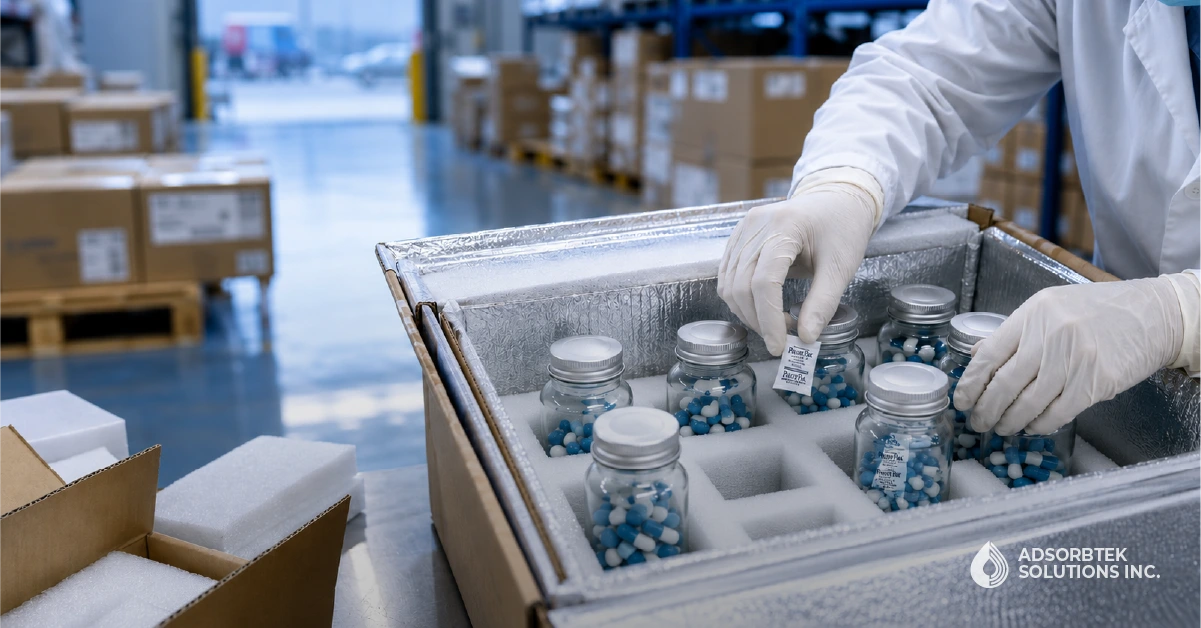
  2. Desiccant pouches absorb water vapor, maintaining the microclimate inside shipments.
  3. Airtight and temperature-stable containers protect formulations against sudden environmental changes.

Modern packaging acts like a protective shield. For example, when vaccines are shipped internationally, advanced boxes with desiccants ensure they don’t get damaged in humid climates or during air transport. Smart packaging combined with monitoring systems ensures medicines reach patients safely and intact.

Choosing the Right Desiccants for Pharmaceuticals

  1. Molecular sieve packs are ideal for high-humidity routes due to superior moisture absorption.
  2. Silica gel unit paks effectively maintain low humidity for smaller shipments.
  3. Quantity, type, and placement of desiccants directly impact protection efficiency.

Choosing the right desiccant is a science. Using too few or placing them incorrectly can allow moisture inside, while the right configuration keeps the shipment perfectly dry. It’s like adding the right number of sponges in a box to absorb all the water without leaving any behind.

Real-Time Monitoring: The Key to Safe Shipping

  1. Humidity and temperature sensors track environmental conditions throughout the supply chain.
  2. Data logs confirm shipments meet regulatory standards and help identify risks early.
  3. Alerts allow logistics teams to take corrective action before products are compromised.

These sensors work like tiny watchdogs inside shipments. They constantly check if the medicine is safe. If humidity rises, alerts notify the team to act quickly, preventing damage. Real-time monitoring adds another layer of protection, making pharmaceutical shipping much safer and more reliable.

Overcoming Common Challenges in Global Shipping

  1. Long transit routes expose shipments to diverse climates, risking moisture intrusion.
  2. Multimodal shipping, air, sea, and land, introduces varying temperatures and humidity levels.
  3. Inadequate packaging or insufficient desiccants can lead to product recalls or financial loss.

Shipping medicines across continents is complex. Imagine a vaccine leaving a cool warehouse in Europe, crossing hot deserts, and landing in a tropical country. Without proper humidity control, the formulation could fail. Careful planning and robust packaging strategies solve these challenges and protect sensitive formulations.

How Industrial Desiccant Solutions Make a Difference

  1. Industrial-grade desiccants regulate humidity inside bulk containers efficiently.
  2. They reduce condensation, moisture build-up, and oxidation during shipping.
  3. High-capacity desiccants are compatible with complex supply chains and long-duration shipments.

Industrial desiccants act like a strong umbrella for medicines. They keep moisture away even on long journeys or in extreme climates. When combined with airtight containers and sensor monitoring, these desiccants ensure medicines arrive intact, effective, and safe for patients.

Best Practices for Humidity Control in Pharmaceutical Logistics

  1. Layered Protection: Combine desiccants, airtight containers, and insulation.
  2. Climate Mapping: Plan routes according to environmental conditions along the way.
  3. Periodic Testing: Sample shipments to ensure the packaging performs as expected.
  4. Compliance Documentation: Maintain records to satisfy regulatory requirements and audits.

Implementing these practices ensures that medicines maintain their quality from the factory to the patient. Companies avoid losses, recalls, and reputation damage, while patients receive safe and effective medications every time.

Closing Note:

At Adsorbtek Solutions Inc., our expertise in industrial desiccant solutions enables us to deliver tailored humidity control strategies that safeguard pharmaceutical shipments. Our team evaluates shipment size, route, and climate to select the right desiccants, placement, and monitoring systems. By relying on our solutions, businesses can ensure medicines maintain potency, remain compliant, and reach patients safely.

Contact Adsorbtek Solutions Inc. today to secure your pharmaceutical shipments with industry-leading humidity control. Protect sensitive formulations and maintain compliance with our reliable, expert solutions.

FAQs:

1. Why is humidity control for shipping crucial for pharmaceuticals?

Proper humidity control prevents moisture damage, maintains potency, and ensures safe delivery of sensitive medicines during transit.

2. How do desiccants help in pharmaceutical shipping?

Desiccants absorb excess moisture, keeping medicines stable and preventing clumping, degradation, or chemical changes during transport.

3. Can sensors improve shipping safety for pharmaceuticals?

Yes, real-time humidity and temperature sensors monitor conditions, alerting us to act before any product quality is compromised.

4. What are common challenges in global pharmaceutical shipping?

Varied climates, long transit times, and multimodal transport increase moisture exposure, requiring precise humidity control strategies.

5. How can businesses ensure compliance during pharmaceutical transport?

By using advanced packaging, industrial desiccants, and proper documentation, we guarantee medicines meet regulatory standards safely.

image
03-02-2026

How Does Molecular Sieve Pillow Pak Support Long-Term Drug Storage Requirements?

Maintaining the stability of moisture-sensitive pharmaceuticals during storage and transport is critical for efficacy and regulatory compliance. Molecular sieve pillow pak plays a crucial role in safeguarding drugs by controlling relative humidity, preventing hydrolysis, crystallization, and potency loss. Engineered with precise desiccant compounds and barrier materials, these pillow paks are tailored for high-value pharmaceuticals that demand stringent storage conditions. Their consistent performance across various storage scenarios ensures both product integrity and regulatory adherence.

Critical Desiccant Compounds in Pillow Paks

The effectiveness of a molecular sieve pillow pak depends on the desiccant chemistry:

  1. Type 3A and 4A molecular sieves: Highly selective for water molecules, providing robust protection for moisture-sensitive APIs. Their crystalline structure allows for rapid adsorption of moisture even in high-humidity conditions.
  2. Activated alumina: Adds complementary adsorption capacity and is compatible with neutral pH-sensitive formulations, preventing chemical interactions.
  3. Silica gel composites: Integrated for dual-phase adsorption, enhancing overall performance in variable environmental conditions and extending operational life of the desiccant.
  4. Barrier laminates and films: Medical-grade, multi-layer laminates create a vapor-impermeable seal, ensuring moisture does not infiltrate during long-term storage or transit.

By combining these compounds strategically, pillow paks maintain a controlled microenvironment, preventing degradation pathways in both solid and liquid dosage forms.

Optimized Design for Uniform Moisture Control

Design precision determines how effectively pillow paks protect pharmaceuticals:

  1. Even desiccant distribution prevents localized moisture pockets that can compromise stability.
  2. Shape and surface area optimization maximizes adsorption efficiency across container surfaces, ensuring uniform moisture capture.
  3. Sealing integrity with high-barrier laminates ensures consistent performance over multi-month storage cycles, reducing the need for frequent monitoring.

Extended design considerations also include layered pouches and venting structures to accommodate high-volume shipments while maintaining uniform humidity protection throughout the pallet or container.

Compliance with Pharmaceutical Standards

Molecular sieve pillow paks must meet rigorous pharma guidelines to be viable:

  1. GMP-aligned production: Guarantees consistent moisture adsorption capacity across batches.
  2. FDA packaging requirements: Ensure moisture thresholds are met and materials are inert with APIs.
  3. ICH Q1A/B stability testing: Confirms drugs retain potency and stability over long-term storage, including under accelerated conditions.
  4. Pharma-grade validation: Confirms all desiccant compounds, barrier materials, and packaging films are compatible with regulatory expectations and do not introduce contaminants.

Meeting these standards reduces regulatory risks, ensures batch-to-batch reliability, and aligns with global storage requirements for high-value pharmaceuticals.

Advantages for Long-Term Drug Storage

Using molecular sieve pillow paks provides measurable benefits for pharmaceutical storage:

  1. Extended shelf life: Protects against hydrolysis, crystallization, and potency loss.
  2. Maintained drug efficacy: Ensures APIs remain therapeutically active throughout their intended shelf life.
  3. Streamlined logistics: Reduces sensitivity to external humidity and temperature fluctuations, enabling flexible storage options.
  4. Scalable applications: Suitable for bulk shipments, multi-pallet transport, and multi-container storage without compromising performance.

These advantages are critical for manufacturers handling high-value biologics, vaccines, or temperature-sensitive solid and liquid formulations, where every unit’s integrity is paramount.

Verification and Monitoring of Desiccant Performance

Continuous monitoring ensures pillow pak efficiency over storage and transit periods:

  1. Humidity indicator cards: Provide visual confirmation of moisture ingress inside containers.
  2. Adsorption testing: Confirms the desiccant is performing within expected operational parameters.
  3. Sealing checks: Validate barrier integrity across multi-layer laminate films.
  4. Compatibility tests with APIs: Ensure no chemical interactions occur, protecting both potency and stability.

These measures support quality assurance programs and align with global regulatory expectations, ensuring that each pharmaceutical batch maintains its safety profile.

Selection Criteria for Pharmaceutical Applications

Choosing the correct pillow pak involves a detailed evaluation of multiple factors:

  1. Desiccant type and quantity: Must match moisture sensitivity of the specific drug formulation.
  2. Container material and dimensions: Influence adsorption efficiency and overall humidity control.
  3. Storage duration and environmental conditions: Determine the required desiccant load and barrier specifications.
  4. Regulatory compliance: Must meet GMP, FDA, and ICH standards to avoid storage-related quality failures.

Proper selection ensures optimal performance, minimizes degradation risk, and supports predictable shelf-life performance, even in complex distribution chains.

Integration Into Supply Chains

Molecular sieve pillow paks are designed for seamless integration into pharmaceutical packaging and logistics systems:

  1. Automated filling compatibility: Reduces handling errors and contamination risk during packaging.
  2. Predictable adsorption rates: Maintain consistent quality across shipments and batches.
  3. Multi-format adaptability: Compatible with bottles, cartons, and palletized shipments, enabling operational flexibility.
  4. Reduced operational intervention: Maintains regulatory compliance without additional monitoring or adjustments during transport.

These factors enable manufacturers to ensure product integrity while optimizing efficiency across the supply chain.

Final Note:

At Adsorbtek Solutions Inc., our molecular sieve pillow pak solutions are engineered for pharmaceuticals that require reliable long-term storage and regulatory compliance. By combining precise desiccant compounds like 3A and 4A molecular sieves, activated alumina, and silica gel composites with robust multi-layer barrier laminates, we ensure drug stability, prevent moisture ingress, and maintain controlled relative humidity. Our expertise extends to seamless integration into packaging lines and supply chain operations. Partner with us for advanced polyester coil desiccant packaging solutions designed to protect your products and preserve their quality throughout storage and transport.

Secure your moisture-sensitive pharmaceuticals with Adsorbtek Solutions Inc. today. Enhance long-term storage performance and regulatory compliance with our molecular sieve pillow pak solutions.

FAQs:

Q1: What is a molecular sieve pillow pak?

A molecular sieve pillow pak is a pharma-grade desiccant pouch designed to control humidity and protect moisture-sensitive drugs during storage and transport.

Q2: How does it support long-term drug storage?

It maintains a controlled microenvironment by adsorbing moisture, preventing hydrolysis, crystallization, and potency loss in pharmaceuticals.

Q3: What compounds are used in these pillow paks?

Common compounds include 3A/4A molecular sieves, activated alumina, and silica gel composites, combined with multi-layer barrier laminates.

Q4: Are molecular sieve pillow paks compliant with regulations?

Yes, they are manufactured according to GMP, FDA, and ICH guidelines, ensuring consistent performance and regulatory adherence.

Q5: How are pillow paks integrated into pharmaceutical packaging?

They can be incorporated into bottles, cartons, pallets, or containers, providing uniform humidity control throughout the supply chain.

image
29-01-2026

Why Do Cosmetic Brands Choose Laminated Tubes for Cosmetics Over Plastic Tubes?

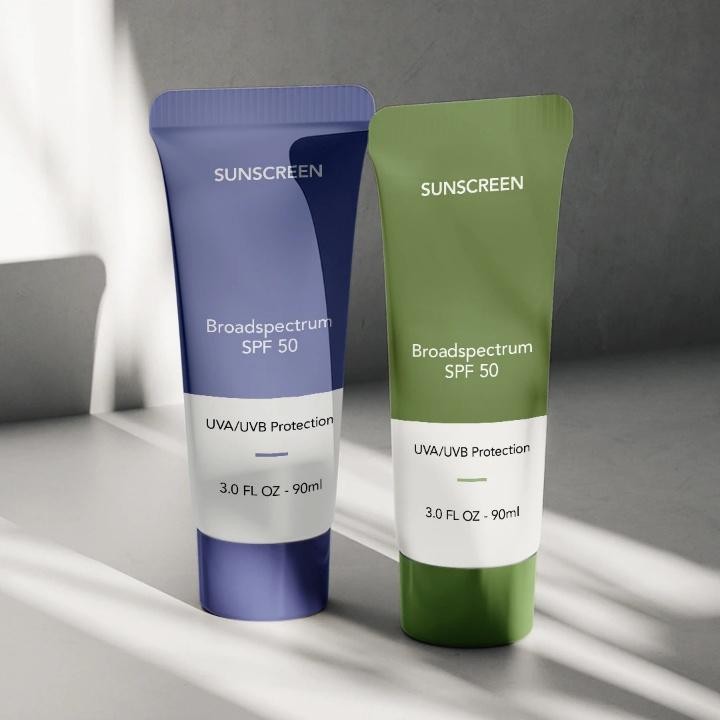
In modern cosmetic manufacturing, laminated tubes for cosmetics are preferred for their ability to maintain product integrity, comply with regulatory standards, and enhance consumer experience. Unlike conventional plastic tubes, laminated solutions use multi-layer composites and barrier technologies that prevent oxidation, moisture ingress, and microbial contamination, ensuring formulations remain stable throughout their lifecycle. These tubes also offer superior printability, allowing brands to convey their premium positioning effectively.

Multi-Layer Barrier Technology Protects Active Ingredients

Cosmetic formulations often contain sensitive compounds like vitamins, peptides, and essential oils that are highly reactive to environmental factors. Laminated tubes protect these ingredients through:

  • Aluminum foil layers that block oxygen and light penetration
  • Polyester (PET) and polyethylene layers providing structural strength and moisture resistance
  • Barrier coatings preventing interaction with the cosmetic formulation

This multi-layer design ensures ingredients like retinol or ascorbic acid remain potent for extended periods. It also prevents oxidative reactions that can compromise fragrance, color, and texture.

Precision Dispensing Enhances User Experience

Packaging impacts not only safety but also consumer satisfaction. Laminated tubes offer:

  • Controlled flow caps for accurate dispensing of creams and gels
  • Consistent product texture delivery with minimal residue
  • Flexible tube walls allowing full product usage without waste

Brands can customize dispensing mechanisms for high-viscosity formulations like hair gels or light creams. The precision dispensing reduces customer frustration while preserving hygiene, ensuring every use delivers consistent product performance.

Compliance-Driven Material Selection for Safety and Quality

Regulatory standards demand strict material compliance. Laminated tubes are manufactured considering:

  • FDA and ISO-approved laminates for cosmetic use
  • GMP-compliant production lines ensuring material traceability and hygiene
  • Non-leaching adhesives and coatings compatible with both aqueous and oil-based formulations

Compliance extends beyond safety; it protects brands from potential recalls and ensures smooth entry into regulated markets, including the EU and North America. This reliability is critical for cosmetic lines with premium ingredients or patented formulations.

Customizable Design for High-Volume Manufacturing

Modern cosmetic production demands packaging that integrates with automated processes. Laminated tubes allow:

  • Variable wall thicknesses to accommodate different viscosities
  • Sealable nozzle tips for hygienic filling
  • Compatibility with high-speed filling machines minimizing downtime and contamination risks

In addition, brands can select tube shapes, print finishes, and barrier layer combinations to differentiate their packaging in competitive retail environments, while maintaining functionality for mass production.

Durability and Stability During Distribution

During shipping, cosmetic products face temperature fluctuations and mechanical stress. Laminated tubes maintain stability by:

  • Reinforced multi-layer construction preventing punctures and leaks
  • Barrier protection against humidity and UV exposure
  • Retention of fragrance, color, and texture throughout the supply chain

For international shipments, these tubes minimize degradation caused by variable climate conditions. They are particularly effective in protecting formulations containing volatile compounds or sensitive oils, which can react to oxygen or moisture.

Advanced Compounds in Laminated Tubes for Cosmetics

The effectiveness of laminated tubes depends on precise selection of compounds and processing:

  • Aluminum foil provides exceptional oxygen and light barrier
  • Polyethylene (PE) layers for chemical inertness and heat sealability
  • Polyester (PET) layers adding mechanical strength and printability
  • Adhesives and coatings ensuring laminate integrity without leaching into the product
  • Optional barrier resins to increase resistance for highly reactive formulations

Additionally, some tubes incorporate siliconized inner layers to improve compatibility with active ingredients or UV-blocking pigments for extra protection. These compounds ensure high stability for cosmetic products requiring longer shelf life and rigorous transport conditions.

Why Leading Brands Trust Laminated Tubes

Laminated tubes are preferred because they combine efficiency, safety, and aesthetics. For cosmetic brands, the tubes are more than packaging; they are an extension of product quality. By selecting laminates that meet regulatory requirements, contain active ingredients safely, and support high-speed production, brands maintain consumer trust while reducing product losses.

Laminated tubes also allow brands to:

  • Reduce waste and improve product utilization
  • Offer differentiated designs for premium positioning
  • Maintain consistency for multi-batch production

This combination of performance, compliance, and design flexibility explains why laminated tubes are becoming the standard in modern cosmetic packaging.

Final Look:

At Adsorbtek Solutions Inc., our laminated tubes for cosmetics are engineered to meet both cosmetic and pharmaceutical-grade packaging requirements. Using advanced laminates, barrier coatings, and validated sealing processes, we ensure products remain safe, stable, and visually appealing throughout their lifecycle. Our solutions meet the specific compound requirements for sensitive formulations while supporting high-volume production lines. For pharmaceutical applications, we also supply laminated tubes for pharma, engineered for strict compliance and long-term stability. Partner with us to safeguard your formulations and enhance consumer satisfaction.

Connect with Adsorbtek Solutions Inc. today to optimize your packaging and protect product integrity from production to end-use.

FAQs:

1. Why do cosmetic brands prefer laminated tubes over plastic tubes?

Laminated tubes provide superior barrier protection against oxygen, moisture, and light, ensuring product stability and longer shelf life.

2. What materials are used in laminated tubes for cosmetics?

Commonly used materials include aluminum foil, polyethylene, polyester, and specialized adhesives for chemical resistance and sealing.

3. Can laminated tubes handle sensitive formulations like vitamins or essential oils?

Yes, multi-layer laminates prevent degradation of sensitive ingredients, maintaining potency, fragrance, and texture during storage and shipping.

4. Are laminated tubes compatible with automated production lines?

They are designed for high-speed filling and sealing, with customizable wall thickness and nozzle configurations to suit different viscosities.

5. How do laminated tubes protect cosmetics during transport?

Multi-layer construction prevents leaks, punctures, and moisture ingress, ensuring products remain stable across varying temperature and humidity conditions.

image
28-01-2026

Why Compliance-Driven Brands Partner With Proven Pharma Desiccant Suppliers

Maintaining moisture control in pharmaceutical products is not optional; it’s a compliance requirement. Pharma desiccant suppliers provide engineered solutions that prevent hydrolysis, oxidation, and microbial growth in sensitive drugs, ensuring active pharmaceutical ingredients (APIs) retain their stability throughout production, storage, and distribution. Effective moisture control safeguards product integrity, reduces recall risks, and ensures compliance with FDA and GMP guidelines. Additionally, these solutions streamline supply chains by mitigating risks associated with high-value or temperature-sensitive shipments.

Moisture Threats in High-Value Pharma Products

Even minor humidity variations can trigger chemical and physical degradation in drugs. Moisture risks include:

  • Hydrolysis of APIs: Certain APIs, such as ampicillin and ceftriaxone, degrade rapidly when exposed to excess water, reducing potency.
  • Excipient Instability: Lactose, starch, and other moisture-sensitive excipients can clump or dissolve unevenly, affecting dosage uniformity and formulation consistency.
  • Packaging Weakness: Laminated tubes, blister packs, and high-barrier containers may fail if RH levels exceed recommended thresholds, impacting shelf life.
  • Cross-Contamination Risk: Moisture can accelerate microbial growth in multi-drug storage, creating contamination hazards.

Pharma desiccants create a controlled microenvironment, maintaining stability across APIs and excipients, and complying with USP <671> and ICH Q1A stability standards.

Key Complexes Used in Pharma Desiccants

Pharmaceutical desiccants rely on precise chemical complexes for effective moisture absorption:

  • Silica Gel: Provides high-capacity adsorption for both liquid and solid dosage forms, with color-indicating variants allowing visual monitoring of saturation levels.
  • Molecular Sieves: Zeolite-based materials selectively adsorb water molecules, ideal for highly hygroscopic APIs and products requiring ultra-low moisture conditions.
  • Calcium Oxide: Rapidly absorbs water in high-humidity environments, commonly paired with silica gel for multi-layer protection.
  • Clay and Bentonite: Economical desiccants suitable for moderate moisture-sensitive products, commonly used in bulk packaging.
  • Activated Carbon Additives: Remove residual moisture while controlling odors, particularly in multi-component formulations.

The correct combination of these complexes ensures tailored protection based on API sensitivity, storage conditions, and regulatory standards.

Compliance Essentials for Pharma Desiccant Applications


Brands rely on pharma desiccant suppliers to meet rigorous regulatory requirements:

  • GMP Integration: Manufacturing, storage, and handling of desiccants must comply with ISO 9001 and WHO GMP protocols, ensuring process consistency.
  • FDA Guidelines: Desiccants must be chemically inert, non-toxic, and validated to maintain moisture within defined limits.
  • ICH Stability Testing: Validated performance across accelerated and long-term storage ensures desiccants consistently control relative humidity.
  • Container Compatibility: Tubes, bottles, blister packs, and multi-pallet shipments must accommodate desiccants without compromising integrity or chemical stability.

Meeting these compliance essentials reduces the risk of regulatory action, product recalls, and financial loss.

Integrating Desiccants Into Packaging Lines

Efficient integration enhances desiccant performance and operational reliability:

  • Automated Desiccant Insertion: Ensures consistent placement in multi-unit packaging, reducing human error and production downtime.
  • Custom Unit Paks and Pillow Paks: Engineered to fit blister packs, bottles, and multi-pallet shipments, providing uniform moisture control across all units.
  • Humidity Monitoring: Inline RH sensors enable real-time verification of environmental control, allowing proactive adjustments to desiccant placement or quantity.
  • Layered Protection Strategies: Combining molecular sieve paks with silica gel canisters ensures redundancy, preventing moisture spikes even in complex packaging.
  • Process Documentation: Maintaining validation logs for insertion, monitoring, and compliance supports audit readiness and regulatory traceability.

Operational Advantages of Trusted Suppliers

Partnering with experienced suppliers provides measurable business benefits:

  • Reduced Product Loss: Proper moisture control prevents API degradation, batch rejection, and costly recalls.
  • Regulatory Assurance: Solutions align with FDA, EMA, USP, and ICH guidelines, ensuring compliance in global markets.
  • Scalable Solutions: Adaptable from small R&D batches to multi-pallet international shipments, facilitating supply chain flexibility.
  • Technical Expertise: Suppliers provide guidance on chemical compatibility, packaging designs, and performance validation.
  • Efficiency Gains: Optimized desiccant placement reduces material waste, labor costs, and potential downtime in production lines.

These advantages collectively strengthen product reliability, operational performance, and brand reputation.

Ending Note:

At Adsorbtek Solutions Inc., we deliver scientifically validated, regulation-ready solutions for moisture-sensitive pharmaceuticals. Our silica gel unit pak and molecular sieve designs are engineered to integrate seamlessly into production lines, meeting GMP, FDA, and ICH compliance requirements. From sensitive APIs to multi-pallet shipments, our desiccants maintain product integrity, extend shelf life, and enhance operational efficiency. Partner with us to implement tailored moisture-control strategies that protect your high-value pharmaceutical products while ensuring complete regulatory adherence.

Contact Adsorbtek Solutions Inc. to implement validated, compliance-driven pharma desiccant solutions today.

FAQs:

1. What are pharma desiccant suppliers?

Pharma desiccant suppliers provide engineered moisture-control solutions for pharmaceutical packaging to maintain product stability and compliance.

2. Why is moisture control critical in pharma products?

Moisture can degrade APIs, destabilize excipients, and reduce shelf life, affecting efficacy and regulatory compliance.

3. What types of desiccant complexes are used in pharmaceuticals?

Common complexes include silica gel, molecular sieves, activated carbon, calcium oxide, and bentonite, tailored to specific APIs.

4. How are desiccants integrated into packaging lines?

They are inserted as unit paks or pillow paks, with automated placement and humidity monitoring for consistent moisture control.

5. How do desiccant solutions support regulatory compliance?

They ensure stability under GMP, FDA, and ICH guidelines, supporting audits, documentation, and international shipment requirements.

image
23-01-2026

What Quality Parameters Define Effective Silica Gel Canister Packaging?

Pharmaceutical products are extremely sensitive to moisture, which can trigger degradation, reduce efficacy, or compromise shelf life. Silica gel canister packaging is a critical component in maintaining product integrity throughout production, storage, and shipping. High-value APIs and moisture-sensitive excipients demand canisters that meet stringent quality standards, integrate effective desiccant complexes, and comply with GMP and FDA guidelines to ensure optimal protection. Properly engineered packaging safeguards your product while ensuring regulatory compliance and operational efficiency.

Material Integrity: The First Line of Defense

The packaging material itself determines how effectively a canister prevents moisture ingress. Modern silica gel canisters are engineered using:

  • High-Density Polyethylene (HDPE) or Aluminium Alloys: Provide strong mechanical resistance and high moisture barrier properties.
  • Chemical Inertness: Avoids interaction with APIs, excipients, or coating layers.
  • USP <671> Compliance: Ensures the material meets pharmaceutical moisture permeability and stability standards.

Additional Considerations:

  • Thickness uniformity affects absorption rates and structural resilience.
  • Compatibility with sterilization methods like gamma radiation or autoclaving is essential for sensitive APIs.
  • Surface smoothness and anti-static properties prevent adherence of powders or fine particulate formulations.

The combination of durable materials and chemical compatibility ensures the canister performs reliably under varying storage and transport conditions.

Desiccant Composition: Optimizing Adsorption

The desiccant inside the canister is the core functional element. Effective packaging leverages pharma-grade desiccant complexes, such as:

  • Silica Gel: High surface area granules provide consistent moisture adsorption.
  • Molecular Sieves: Capture trace moisture in highly sensitive APIs.
  • Activated Carbon: Removes odors and volatile contaminants during storage.
  • Calcium Oxide and Bentonite Blends: Act as supplementary moisture buffers for multi-layer packaging.

Technical Insights:

  • Granule size and porosity directly impact adsorption kinetics.
  • Layered desiccant arrangements optimize airflow and moisture capture efficiency.
  • Moisture indicators integrated within the desiccant allow visual verification of performance.

These complexes are selected based on API sensitivity, storage conditions, and shelf-life requirements, ensuring uniform performance over time.

Canister Design: Balancing Functionality and Efficiency

Packaging design impacts adsorption efficiency and overall protection. Quality canisters feature:

  • Optimized Internal Geometry: Ensures even airflow and prevents channeling of moisture.
  • Sealing Mechanisms: Screw caps, snap-fit closures, or vacuum-sealed lids maintain airtight conditions.
  • Stacking and Handling Features: Reduces the risk of deformation or leakage during transport.

Design Sub-Pointers:

  • Internal ridges and baffles direct moisture evenly across the desiccant bed.
  • Multi-layer seals enhance redundancy and extend shelf-life under extreme conditions.
  • Transparent or semi-transparent bodies allow inspection without opening the canister.

Designing for consistent performance across multiple batches is crucial for GMP-compliant pharmaceutical packaging.

Regulatory Compliance: Meeting Pharma Standards

Compliance is non-negotiable in pharmaceutical packaging. Critical regulatory considerations include:

  • GMP Guidelines: Ensures reproducible moisture control and packaging validation.
  • FDA Requirements: Canisters must meet safety, labeling, and documentation standards.
  • ICH Stability Protocols (Q1A & Q1B): Packaging must maintain controlled humidity during stability testing.

Additional Compliance Measures:

  • Batch traceability ensures accountability from production to distribution.
  • Documentation must include desiccant weight, adsorption capacity, and seal integrity test results.
  • Temperature and humidity cycling tests confirm stability under transit and storage conditions.

Every canister must be traceable, validated, and supported by documented QA protocols to meet audits and inspections.

Performance Verification: Metrics for Quality Assurance

Routine monitoring ensures canisters consistently deliver performance. Key QA parameters include:

  • Humidity Sensors: Track relative humidity within the canister during storage.
  • Weight and Adsorption Testing: Confirms silica gel and molecular sieves maintain absorption capacity.
  • Visual Inspection: Detects moisture ingress, discoloration, or desiccant clumping.

Verification Sub-Pointers:

  • Periodic re-testing of desiccant adsorption ensures consistent moisture control over multiple shipments.
  • Shelf-life simulations help predict canister performance under high-humidity conditions.
  • Instrumentation like moisture analyzers or gravimetric testing validates batch performance.

These verification measures reduce risk, ensure compliance, and guarantee API stability from production to end-user delivery.

Customization for Pharmaceutical Requirements

Advanced silica gel canister packaging adapts to product-specific needs. Parameters for customization include:

  • Dosage Form Sensitivity: Powdered APIs vs. liquid formulations require different desiccant loads.
  • Environmental Conditions: High-humidity regions demand higher adsorption capacity.
  • Container Size and Volume: Optimized to ensure uniform desiccant distribution and product protection.

Optimization Strategies:

  • A combination of molecular sieves with silica gel enhances performance for ultra-sensitive APIs.
  • Integrated moisture indicators and color-changing desiccants allow easy field verification.
  • Custom fill volumes prevent excessive headspace, which can reduce adsorption efficiency.

Custom solutions enhance operational efficiency while maintaining consistent moisture control across diverse supply chains.

Closing Note:

Selecting effective silica gel pillow pak solutions requires expertise in material selection, desiccant complexes, design, and compliance. At Adsorbtek Solutions Inc., we combine silica gel, molecular sieves, activated carbon, and calcium oxide in carefully engineered canisters that meet GMP and FDA standards. Our solutions ensure predictable moisture control, protect sensitive APIs, and deliver robust performance across production, storage, and shipping. Partner with us to optimize your packaging lines and safeguard pharmaceutical products from degradation and moisture-related failures.

FAQs:

1. What is the role of silica gel canister packaging in pharma products?

It maintains low humidity inside containers, preventing degradation of moisture-sensitive APIs and extending shelf life.

2. Which desiccant compounds are commonly used in canisters?

Silica gel, molecular sieves, activated carbon, and calcium oxide are standard to ensure optimal moisture control.

3. How does canister design affect performance?

Internal geometry, sealing mechanisms, and material integrity ensure uniform moisture absorption and prevent ingress during storage and transit.

4. What regulatory standards must effective canisters meet?

GMP compliance, FDA packaging guidelines, and ICH stability protocols ensure safety, reliability, and validated performance.

5. How can the performance of silica gel canisters be verified?

Humidity sensors, adsorption capacity testing, and visual inspection confirm consistent moisture control across batches.

Search

Recent Posts

image
image
image
image
image
image
image
image
image
image
image
image
image
image
image
image
image
image
image
image
image
image
image
image
image
image

Have any questions?

call us today!

+1-647-722-4353