
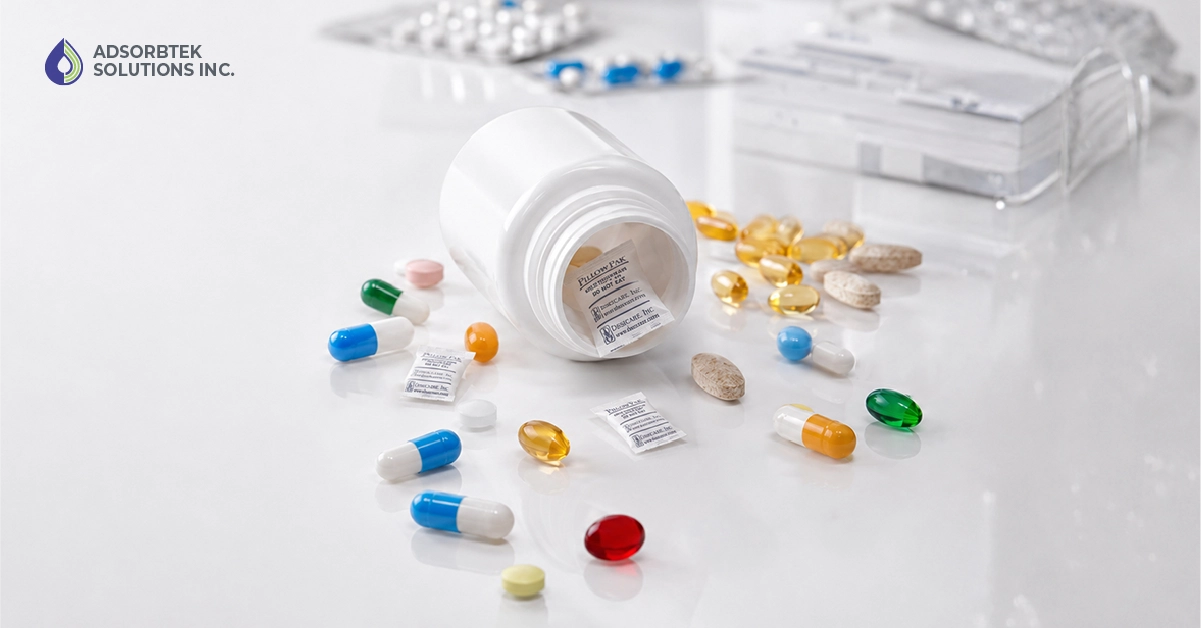
How Do Desiccant Packaging Materials Prevent Moisture Damage in Medicines?
Pharmaceutical products are sensitive to moisture. The presence of moisture can alter the potency of the drug, accelerate drug degradation, and eventually make the drug not fit for consumption. Desiccants ensure a drug's potency, maintain physicochemical properties, and enhance its stability. Moisture protection should not be compromised; rather, it is a necessity for every pharmaceutical product. Pharmaceutical manufacturers that fail to use proper moisture control risk irreversible damage to their products, increase their batch recall frequency, and most importantly, compromise patient health.1
Why Moisture Poses a Risk to Medicines
The presence of moisture can have adverse effects on different solid oral dosage forms. It can cause:
-
Capsule adhesion, leading to inaccurate dosages.
-
Drug hydrolysis, reducing their potency.
-
Powder clumping, decreases the stability of powdered formulations.
The timescale at which these problems can arise is fast, especially in an uncontrolled environment during storage or shipping. Therefore, controlling humidity is crucial.2
How Modern Desiccants Protect Medicines
Desiccants are agents that are designed to adsorb moisture from the environment. Today’s technology allows for precise and efficient moisture control, making solid oral dosages safer for longer. Popular options include:
-
Silica Gel: These are very common and help remove moisture slowly over a long period.
-
Molecular Sieves: These work for highly sensitive medicines and can target specific humidity levels.
-
Activated Carbon: A unique solution for products that contains volatile organic compounds (VOCs) that give rise to foul odor.
Desiccants can create a controlled environment for pharmaceutical products by continuous moisture adsorption.3
Intelligent Packaging Designs That Enhance Protection
Desiccants work best when combined with smart packaging designs. Modern packaging methods are designed to prevent moisture contamination:
-
Barrier Films: Multi-layer foils prevent water vapor from passing through the packaging.
-
Airtight Bottles: HDPE or PET bottles keep the internal environment stable when paired with desiccants.
-
Integrated Sachets: Small desiccant pouches inside bottles or cartons provide precise moisture control.
Using a combination of desiccants and protective packaging enhances drug stability, reduces waster and improves shelf life.
Smart Monitoring for Pharmaceutical Safety
To prevent losses and maintain quality, monitoring systems are now part of packaging:
-
Silica Gel Indicators: A card that changes colour depending on moisture levels in the vicinity. It is used to monitor moisture levels inside a container.
-
Temperature & Humidity Sensors: These devices track conditions during shipping and storage.
-
Regulatory Compliance: Aligns with FDA, EMA, and ICH standards, helping ensure products meet international safety rules.
Smart monitoring allows companies to act before medicines are damaged. This proactive approach protects patient safety and reduces financial losses.
Choosing the Right Desiccant for Each Product
Not all desiccants work the same. Choosing the right one depends on product type, container, and shipping conditions:
-
Highly Sensitive solid oral dosages: Use silica gel or molecular sieves to maintain precise humidity levels.
-
Container Type: Tablets, powders, liquids, and creams all need desiccants in different forms.
-
Shipping Environment: Long-distance or temperature-variable shipping requires stronger or larger desiccants.
Consulting an expert ensures the proper amount and type of desiccant is used, keeping medicines safe throughout their journey.4
Partnering With Trusted Suppliers
Reliable suppliers make a big difference. They provide desiccants that are tested, certified, and consistent in quality:
-
Consistency and Reliability: Packs perform exactly as expected for long-term protection.
-
Expert Recommendations: Help choose the right desiccant type, size, and quantity for specific medicines.
-
Regulatory Adherence: Supports compliance with strict safety and quality standards.
Choosing the right supplier ensures medicines are always protected, and operations run smoothly.
Ending Note:
At Adsorbtek Solutions Inc., we offer high-performance pharmaceutical-grade desiccants that protect sensitive solid oral dosages. Our team works closely with clients to select the best products for each formulation, ensuring stability, compliance, and long shelf life. By partnering with us, you get solutions from one of the best desiccant suppliers that guarantee reliability, safety, and quality control.
We help our customers manage moisture risks, improve product stability, and meet global regulatory standards, making sure your formulations reach patients safely and effectively.
FAQs:
1. What are desiccant packaging materials used for?
Desiccant packaging materials keep medicines dry by absorbing moisture, ensuring safety and effectiveness throughout storage and shipping.
2. How do desiccants protect tablets and powders?
They remove excess humidity inside packaging, preventing clumping, caking, or degradation of sensitive formulations.
3. Which types of desiccants work best for pharmaceuticals?
Silica gel, molecular sieve packs, and clay pouches are ideal depending on the product and shipping conditions.
4. Can desiccants help medicines during long-distance shipping?
Yes, they maintain low moisture levels even in varying temperature and humidity conditions, keeping medicines stable.
5. Why should I choose trusted suppliers for desiccants?
Reliable suppliers like Adsorbtek Solutions Inc. provide tested, compliant, and high-quality materials for consistent protection.
Sources:
-
Veronica, N.; Wan, P.; Celine Valeria Liew. Relative Humidity Cycling: Implications on the Stability of Moisture-Sensitive Drugs in Solid Pharmaceutical Products. Molecular Pharmaceutics 2022, 20 (2), 1072–1085. https://doi.org/10.1021/acs.molpharmaceut.2c00812.
-
Kemp, C.; Skibic, M. Effects of Humidity Exposure on a Solid Dosage Form Dissolution Performance. Microscopy and Microanalysis 2009, 15 (S2), 384–385. https://doi.org/10.1017/s143192760909237x.
-
Hahn, U. Move It Odour! How to Prevent Moisture in Pharmaceutical Packaging; 2019. https://pharmaceuticalmanufacturer.media/pharmaceutical-industry-insights/move-it-odour-how-to-prevent-moisture-in-pharmaceutical-pack/ (accessed 2026-07-23).
-
Waterman, K. C.; Macdonald, B. C. Package Selection for Moisture Protection for Solid, Oral Drug Products. Journal of Pharmaceutical Sciences 2010, 99 (11), 4437–4452. https://doi.org/10.1002/jps.22161.