
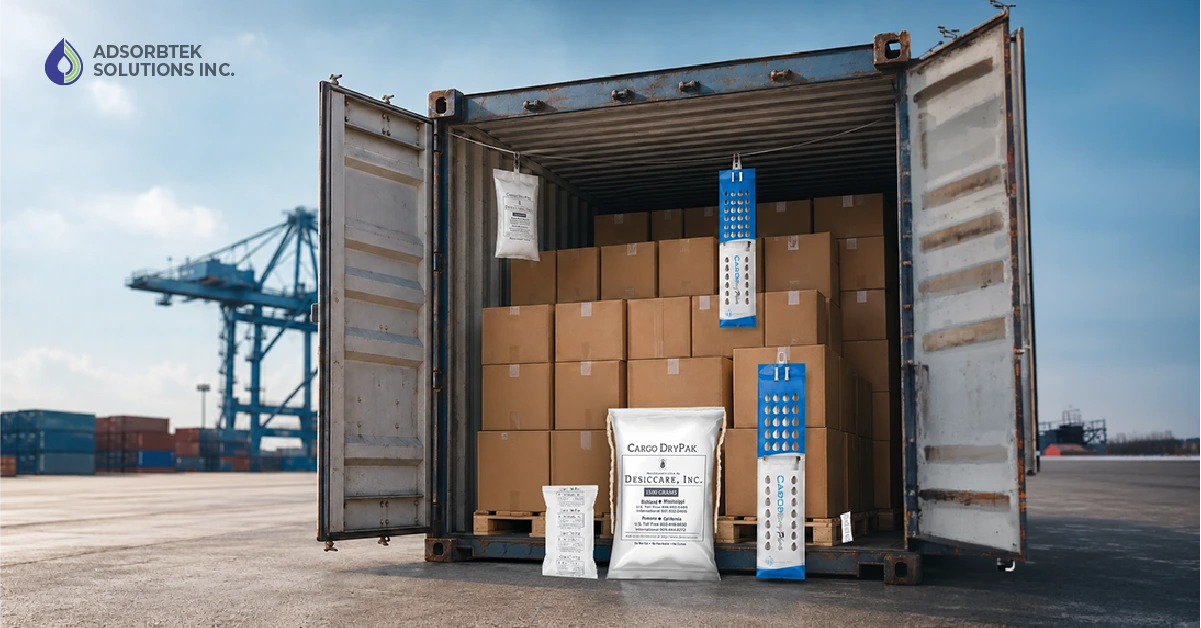
Why Is Bulk Desiccant for Shipping Essential for Global Pharma Distribution?
Maintaining the quality of medicines during international transport is critical. Bulk desiccant for shipping ensures pharmaceuticals remain stable, preventing moisture damage, potency loss, or contamination. With complex global supply chains, pharma manufacturers need reliable desiccant solutions to safeguard sensitive formulations while complying with international regulations. Medicines, especially tablets, capsules, powders, and biologics, are extremely sensitive to humidity. A tiny amount of water can affect their performance, stability, or safety.
1. The Science Behind Moisture Protection in Pharma Shipping
Pharmaceutical products can degrade if exposed to humidity. Bulk desiccants act like sponges, absorbing moisture inside packaging or shipping containers. This keeps medicines dry and safe.
Why It Matters:
- Prevents chemical breakdown of active ingredients
- Reduces microbial growth in high-moisture environments
- Ensures consistent product efficacy for end users
Real-World Example: Imagine tablets in a tropical country. Without desiccants, they can clump together or lose strength. Bulk desiccants prevent this by maintaining low humidity levels.
Compliance Insight: Using desiccants supports GMP and ICH Q1A stability guidelines for pharmaceutical transport.
2. Types of Bulk Desiccants for Pharma Transport
Not all desiccants perform equally. Choosing the right type depends on product sensitivity, shipment duration, and environmental conditions.
Common Options Include:
- Silica Gel: Fast moisture absorption, safe for most pharmaceuticals
- Molecular Sieve: High-capacity desiccant for extreme humidity conditions
- Clay-Based Desiccants: Economical and suitable for short-term transport
Tip: Combining different desiccant types can optimize protection across varying climates during global shipping.
Compliance Insight: Selecting desiccants that meet pharmaceutical-grade standards ensures regulatory compliance and safe transport.
3. Strategic Placement for Maximum Efficiency
Simply adding desiccants is not enough; placement determines effectiveness. Bulk desiccants should be distributed evenly across cargo to prevent moisture pockets.
Best Practices:
- Place packs near areas prone to condensation
- Avoid blocking airflow around products
- Monitor humidity with sensors for critical shipments
Example: In a container of vials, placing desiccants near the corners and top ensures the air inside stays dry.
Compliance Insight: Proper placement aligns with IATA and WHO guidelines for temperature and humidity control in pharma logistics.
4. Protecting Medicines Through Global Supply Chains
Shipping pharmaceuticals internationally exposes products to diverse climates. From tropical ports to cold storage warehouses, uncontrolled humidity can compromise product quality.
Bulk Desiccant Advantages:
- Maintains optimal humidity levels during long transit
- Minimizes risk of condensation and packaging damage
- Ensures safe delivery even in extreme weather conditions
Example: A shipment from Asia to Europe can face high humidity in tropical ports and dry cold air in airplanes. Bulk desiccants balance humidity inside the container.
Compliance Insight: Using bulk desiccants helps meet international transport regulations for medicinal products, avoiding penalties or shipment rejection.
5. Bulk Desiccants and Cost Efficiency
Moisture damage can lead to massive financial losses due to spoiled inventory or product recalls. Bulk desiccants reduce risk, saving manufacturers money.
Benefits for Pharma Businesses:
- Lowers product waste and replacement costs
- Reduces delays caused by damaged shipments
- Supports consistent delivery schedules for global clients
Example: A shipment of vaccines exposed to high humidity could lose potency, requiring costly replacement. Bulk desiccants prevent this, ensuring investment protection.
Compliance Insight: Documented desiccant usage demonstrates adherence to stability and quality standards, supporting regulatory audits.
6. Partnering With Trusted Desiccant Suppliers
Reliable suppliers ensure high-quality desiccants and proper packaging solutions. Expert guidance is crucial for selecting the right desiccant type, quantity, and placement.
What to Expect from Suppliers:
- Verified pharmaceutical-grade desiccants
- Regulatory compliance documentation
- Support for container design and distribution strategies
Example: A supplier can recommend the exact number of silica gel packs needed for a 20-foot container carrying sensitive medications.
Compliance Insight: Partnering with certified suppliers ensures adherence to ISO, GMP, and IATA standards.
7. Enhancing Operational Safety and Product Confidence
Bulk desiccants provide peace of mind for manufacturers, distributors, and pharmacists. Controlled humidity reduces risks and protects product integrity.
Operational Advantages:
- Minimizes moisture-related complaints from clients
- Ensures compliance with quality control measures
- Strengthens brand trust in the pharmaceutical market
Example: Hospitals receiving medicines can rely on consistent quality, even if the shipment traveled through humid ports.
8. Advanced Monitoring With Humidity Sensors
Modern shipping uses digital humidity sensors alongside bulk desiccants. These sensors track moisture in real time and alert suppliers if conditions change.
Benefits:
- Immediate notification of humidity spikes
- Ability to take corrective action before damage occurs
- Improved traceability for compliance reporting
Compliance Insight: Digital monitoring supports FDA, EMA, and WHO requirements for real-time environmental control.
9. Regulatory and Compliance Considerations
Global pharma distribution is tightly regulated. Bulk cargo desiccants must meet pharmaceutical-grade quality standards and comply with GMP, ISO, IATA, and WHO guidelines.
Key Compliance Points:
- Documentation for regulatory audits
- Validation of desiccant efficacy
- Safe handling and placement protocols
Example: Incorrect desiccant placement can lead to moisture damage and regulatory non-compliance, risking shipment rejection.
In Closing:
Global pharmaceutical distribution requires precise moisture control. Using container desiccant packaging with bulk desiccants ensures medicines reach their destination intact, safe, and effective. At Adsorbtek Solutions Inc., our bulk desiccant solutions are tailored to meet international compliance standards. We provide guidance on desiccant type, placement, and quantity, giving our clients confidence in every shipment. Protect your products and your brand with our proven solutions today.
Contact Adsorbtek Solutions Inc. to enhance your pharmaceutical shipments with reliable bulk desiccant protection and ensure product safety across the globe.
FAQs:
Q1: Why are bulk desiccants important for shipping pharmaceuticals?
A1: Bulk desiccants control moisture levels during transport, protecting medicines from degradation and ensuring they remain safe and effective.
Q2: How do bulk desiccants work in pharma shipments?
A2: They absorb excess humidity inside containers, preventing chemical breakdown, clumping, or microbial growth in medicines.
Q3: Can bulk desiccants help comply with global regulations?
A3: Yes, using certified bulk desiccants supports GMP, ISO, IATA, and WHO guidelines for pharmaceutical shipping.
Q4: What types of bulk desiccants are commonly used?
A4: Silica gel, molecular sieves, and clay-based desiccants are preferred, each suited for specific humidity conditions and product needs.
Q5: How should desiccants be placed in shipping containers?
A5: Even distribution near moisture-prone areas ensures optimal humidity control, maintaining medicine quality and regulatory compliance.