
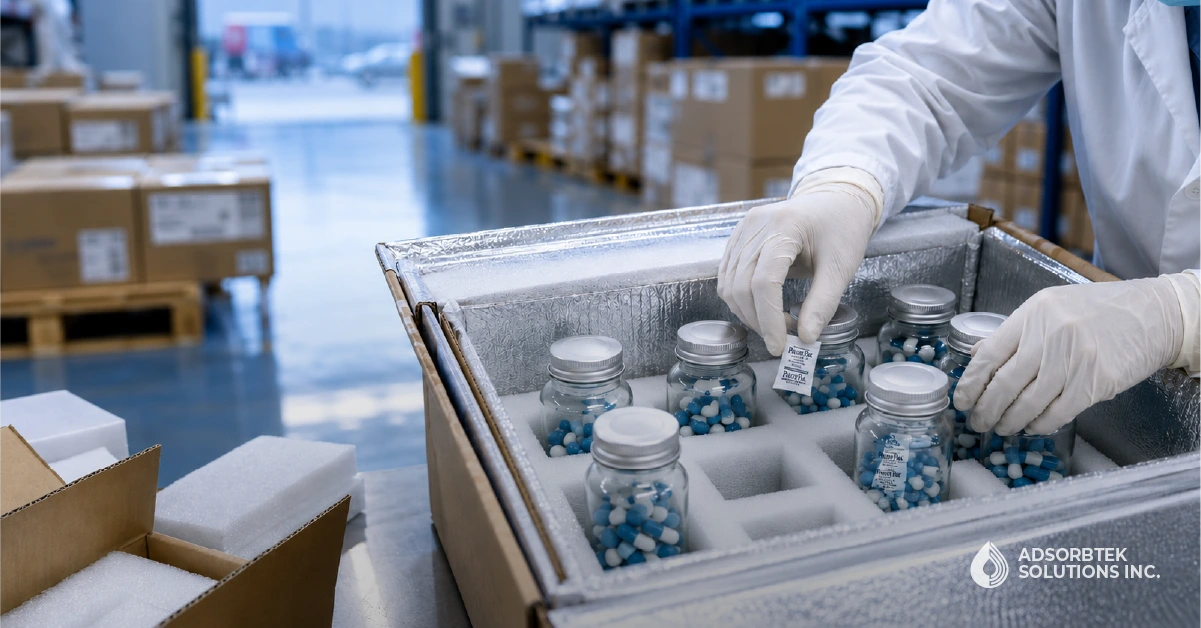
Why Is Proper Humidity Control for Shipping Essential for Pharmaceuticals?
Maintaining precise humidity control for shipping is no longer optional in pharmaceutical logistics; it’s essential. Medicines, vaccines, and sensitive formulations are highly prone to moisture damage during transit. Even minor humidity fluctuations can alter chemical composition, reduce shelf life, or compromise safety. Pharmaceutical companies now rely on advanced shipping strategies to safeguard products and maintain regulatory compliance. Humidity affects everything from tablets to vaccines. Even a small rise in moisture can make capsules stick together, powders clump, or syrups lose their effectiveness. Ensuring the right environment during shipping protects patients and prevents costly losses.
The Hidden Threat of Moisture on Medicines
- Moisture can cause tablets to dissolve prematurely, capsules to soften, and powders to clump.
- Excess humidity can trigger chemical reactions in sensitive formulations, reducing potency.
- Even short-term exposure to high moisture levels during shipping can make products unsellable.
Imagine a medicine powder that turns into a lump because of tiny water drops during transit. That medicine could lose its effect, causing problems for patients and companies alike. Recognizing these risks highlights why humidity control is a non-negotiable requirement for pharmaceuticals.
Advanced Packaging Techniques That Control Humidity
- Multi-layered packaging prevents moisture from entering containers.
- Desiccant pouches absorb water vapor, maintaining the microclimate inside shipments.
- Airtight and temperature-stable containers protect formulations against sudden environmental changes.
Modern packaging acts like a protective shield. For example, when vaccines are shipped internationally, advanced boxes with desiccants ensure they don’t get damaged in humid climates or during air transport. Smart packaging combined with monitoring systems ensures medicines reach patients safely and intact.
Choosing the Right Desiccants for Pharmaceuticals
- Molecular sieve packs are ideal for high-humidity routes due to superior moisture absorption.
- Silica gel unit paks effectively maintain low humidity for smaller shipments.
- Quantity, type, and placement of desiccants directly impact protection efficiency.
Choosing the right desiccant is a science. Using too few or placing them incorrectly can allow moisture inside, while the right configuration keeps the shipment perfectly dry. It’s like adding the right number of sponges in a box to absorb all the water without leaving any behind.
Real-Time Monitoring: The Key to Safe Shipping
- Humidity and temperature sensors track environmental conditions throughout the supply chain.
- Data logs confirm shipments meet regulatory standards and help identify risks early.
- Alerts allow logistics teams to take corrective action before products are compromised.
These sensors work like tiny watchdogs inside shipments. They constantly check if the medicine is safe. If humidity rises, alerts notify the team to act quickly, preventing damage. Real-time monitoring adds another layer of protection, making pharmaceutical shipping much safer and more reliable.
Overcoming Common Challenges in Global Shipping
- Long transit routes expose shipments to diverse climates, risking moisture intrusion.
- Multimodal shipping, air, sea, and land, introduces varying temperatures and humidity levels.
- Inadequate packaging or insufficient desiccants can lead to product recalls or financial loss.
Shipping medicines across continents is complex. Imagine a vaccine leaving a cool warehouse in Europe, crossing hot deserts, and landing in a tropical country. Without proper humidity control, the formulation could fail. Careful planning and robust packaging strategies solve these challenges and protect sensitive formulations.
How Industrial Desiccant Solutions Make a Difference
- Industrial-grade desiccants regulate humidity inside bulk containers efficiently.
- They reduce condensation, moisture build-up, and oxidation during shipping.
- High-capacity desiccants are compatible with complex supply chains and long-duration shipments.
Industrial desiccants act like a strong umbrella for medicines. They keep moisture away even on long journeys or in extreme climates. When combined with airtight containers and sensor monitoring, these desiccants ensure medicines arrive intact, effective, and safe for patients.
Best Practices for Humidity Control in Pharmaceutical Logistics
- Layered Protection: Combine desiccants, airtight containers, and insulation.
- Climate Mapping: Plan routes according to environmental conditions along the way.
- Periodic Testing: Sample shipments to ensure the packaging performs as expected.
- Compliance Documentation: Maintain records to satisfy regulatory requirements and audits.
Implementing these practices ensures that medicines maintain their quality from the factory to the patient. Companies avoid losses, recalls, and reputation damage, while patients receive safe and effective medications every time.
Closing Note:
At Adsorbtek Solutions Inc., our expertise in industrial desiccant solutions enables us to deliver tailored humidity control strategies that safeguard pharmaceutical shipments. Our team evaluates shipment size, route, and climate to select the right desiccants, placement, and monitoring systems. By relying on our solutions, businesses can ensure medicines maintain potency, remain compliant, and reach patients safely.
Contact Adsorbtek Solutions Inc. today to secure your pharmaceutical shipments with industry-leading humidity control. Protect sensitive formulations and maintain compliance with our reliable, expert solutions.
FAQs:
1. Why is humidity control for shipping crucial for pharmaceuticals?
Proper humidity control prevents moisture damage, maintains potency, and ensures safe delivery of sensitive medicines during transit.
2. How do desiccants help in pharmaceutical shipping?
Desiccants absorb excess moisture, keeping medicines stable and preventing clumping, degradation, or chemical changes during transport.
3. Can sensors improve shipping safety for pharmaceuticals?
Yes, real-time humidity and temperature sensors monitor conditions, alerting us to act before any product quality is compromised.
4. What are common challenges in global pharmaceutical shipping?
Varied climates, long transit times, and multimodal transport increase moisture exposure, requiring precise humidity control strategies.
5. How can businesses ensure compliance during pharmaceutical transport?
By using advanced packaging, industrial desiccants, and proper documentation, we guarantee medicines meet regulatory standards safely.