
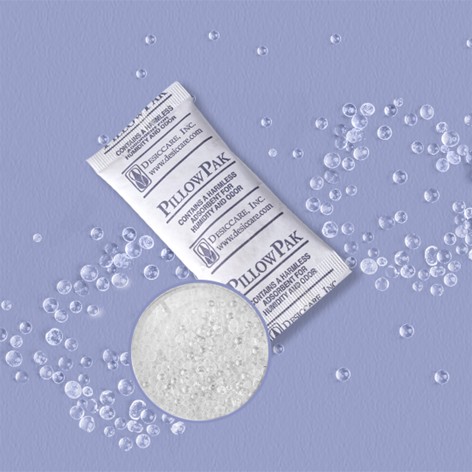
Why Is Pharma Desiccant Packaging Essential for Moisture Control in Solid Oral Dosage Forms?
Effective moisture management is critical in the pharmaceutical industry, particularly for solid oral dosage forms. Pharma desiccant packaging plays a vital role in maintaining product integrity, preventing hydrolytic degradation, and ensuring compliance with GMP and ICH stability protocols. Selecting the right desiccant system can reduce losses, extend shelf life, and safeguard API potency during storage and transportation.
Understanding Moisture Sensitivity in Solid Oral Dosage Forms
Solid oral dosage forms, such as tablets and capsules, are highly susceptible to moisture-mediated degradation. Excess humidity can cause:
- Hydrolysis of moisture-sensitive APIs
- Caking, swelling, or deformation of tablets
- Reduced dissolution rates affecting bioavailability
Pharma desiccant packaging offers a controlled micro‑environment by absorbing residual moisture within the packaging, ensuring the product remains stable throughout its shelf life. The selection of appropriate desiccant type, size, and placement is critical for maintaining low relative humidity levels in blister cavities or bottle closures.
Over storage and transit, even small variations in relative humidity can significantly impact the active pharmaceutical ingredient’s physical and chemical stability. Proper desiccant usage helps mitigate risks associated with moisture exposure, thereby preserving efficacy under ICH Q1A long-term and accelerated storage conditions.
Key Performance Parameters for Desiccant Packaging
The effectiveness of desiccant packaging is determined by measurable parameters aligned with pharmaceutical standards:
- Water Vapor Transmission Rate (WVTR): Ensures minimal moisture ingress over the product lifecycle
- Oxygen Transmission Rate (OTR): Maintains API stability in oxidation-sensitive formulations
- Desiccant Capacity and Placement: Optimized to achieve consistent micro‑environmental control
By controlling these parameters, pharma companies align packaging design with regulatory frameworks such as USP <671> for permeability testing and ICH Q1A for stability. This supports the development of validated packaging systems that withstand both accelerated (e.g., 40°C / 75 % RH) and real-time stability conditions.
Comparing Desiccant Types for Solid Dosage Forms
Different desiccant materials offer unique advantages, depending on the formulation and packaging format:
- Silica Gel: High moisture adsorption, widely compatible with tablet and capsule packaging
- Molecular Sieves: Rapid moisture uptake, ideal for highly hygroscopic APIs
- Clay Desiccants: Cost-effective and sufficient for moderate moisture control needs
Technical evaluation of these desiccants includes testing for adsorption kinetics, compatibility with APIs, and mechanical stability. For example, a study on desiccant behavior highlights that adsorption and desorption kinetics of silica gel depend greatly on humidity history (hysteresis), which influences how desiccants should be sized and placed in packaging. MDPI
Choosing the right desiccant involves balancing capacity, chemical inertness, and cost, while also ensuring the micro‑environment remains within the design specification for stability.
Integrating Desiccants into GMP‑Compliant Packaging Workflows
For packaging engineers and quality assurance teams, integrating desiccants requires rigorous validation:
- Material Qualification: Characterize desiccant chemistry and assess impurity profile
- Process Validation: Confirm compatibility with automated filling and sealing operations
- Batch Traceability: Document lot-specific performance and ensure full traceability for audits
- Routine Testing: Perform ongoing monitoring of WVTR, OTR, and residual moisture levels
These steps ensure that the desiccant system aligns with GMP standards, supports regulatory submissions, and maintains performance consistency over time. Verification of these parameters provides confidence during audits and stability studies.
Study Highlight: Controlled Humidity via Desiccant Systems
A notable peer-reviewed study explored a desiccant system using saturated salt solutions in polymer desiccant bags to regulate the internal humidity of containers for solid dosage forms. PubMed In this work, bags made from different polymers were loaded with salts that maintain a defined equilibrium relative humidity, enabling long-term control of the internal container environment with smaller desiccant sizes. This research validates how advanced desiccant designs can maintain stable humidity levels in real pharmaceutical packaging, making them practical for tablets and capsules that are sensitive to moisture.
Case Applications in Solid Oral Pharmaceuticals
Pharma desiccant packaging is widely applied in real-world scenarios for solid dosage forms:
- Hygroscopic Tablets: Maintain active drug potency by regulating internal humidity
- Moisture-Sensitive Capsules: Prevent clumping and morphological changes during transit
- Stability-Sensitive Formulations: Combine desiccants and barrier cartons to support long-term ICH Q1A stability
These use cases show how carefully engineered desiccant systems deliver meaningful benefits:desiccants improving shelf life, reducing degradation, and ensuring patient safety.
Regulatory and Quality Assurance Implications
Proper desiccant packaging directly supports regulatory compliance:
- Documentation of desiccant fill, performance data, and stability integration
- Demonstrated efficacy under ICH Q1A accelerated and long-term protocols
- Support for GMP inspections through validated traceability and quality audits
- Alignment with pharmacopeial limits for extractable and leachable components
Manufacturers relying on robust desiccant systems can better manage risk, reduce product returns, and meet international regulatory requirements.
Closing Note:
Working with a specialized provider offers strategic advantages. Adsorbtek Solutions Inc. delivers USFDA-approved, custom pharma desiccant packaging solutions tailored for solid oral dosage forms. Our desiccants are optimized for optimal capacity, minimal residual moisture, and seamless integration into pharmaceutical workflows. As a trusted partner and pharma desiccant supplier, we collaborate with R&D, quality, and packaging engineers to validate performance, provide technical documentation, and support stability studies. Our expertise helps manufacturers confidently design moisture-controlled packaging that aligns with both regulatory requirements and product quality goals.
Get in touch with Adsorbtek Solutions Inc. to evaluate your moisture control strategy and implement validated desiccant packaging solutions for your solid oral dosage products.
FAQs:
1. Why is desiccant packaging important for solid oral dosage forms?
It maintains low humidity levels, preventing hydrolysis and physical changes in tablets and capsules.
2. What types of desiccants are used in pharma packaging?
Silica gel, molecular sieves, and clay desiccants are selected based on moisture sensitivity of the API.
3. How does desiccant packaging support GMP and ICH compliance?
It ensures controlled micro-environments, validated traceability, and alignment with stability testing protocols.
4. Can desiccant bags extend shelf life of tablets?
Yes, by reducing moisture ingress and preventing degradation, they preserve API potency and physical integrity.
5. How do manufacturers choose the right desiccant system?
Through technical evaluation of WVTR, OTR, chemical compatibility, and packaging format requirements.